


This is the final post in a 5-part series, The Unit Problem, on how grocers can reverse unit volume contraction. Here’s where we started.
TL;DR
Broadcasting the same 40 deals to every loyalty member is not a promotion strategy. It is unit volume leaving. The grocers closing that gap are not building new technology. They are using purchase history they already have to personalize offers, timing replenishment, and do the coupon work before the shopper opens the app. This final post in the series ends with a 90-day test you can take into a budget meeting.
Most grocery apps greet you with a coupon library. Browse hundreds of offers, find the relevant ones, clip each manually, and remember them at checkout. Shoppers doing that in 2026 are already doing more work than they should.
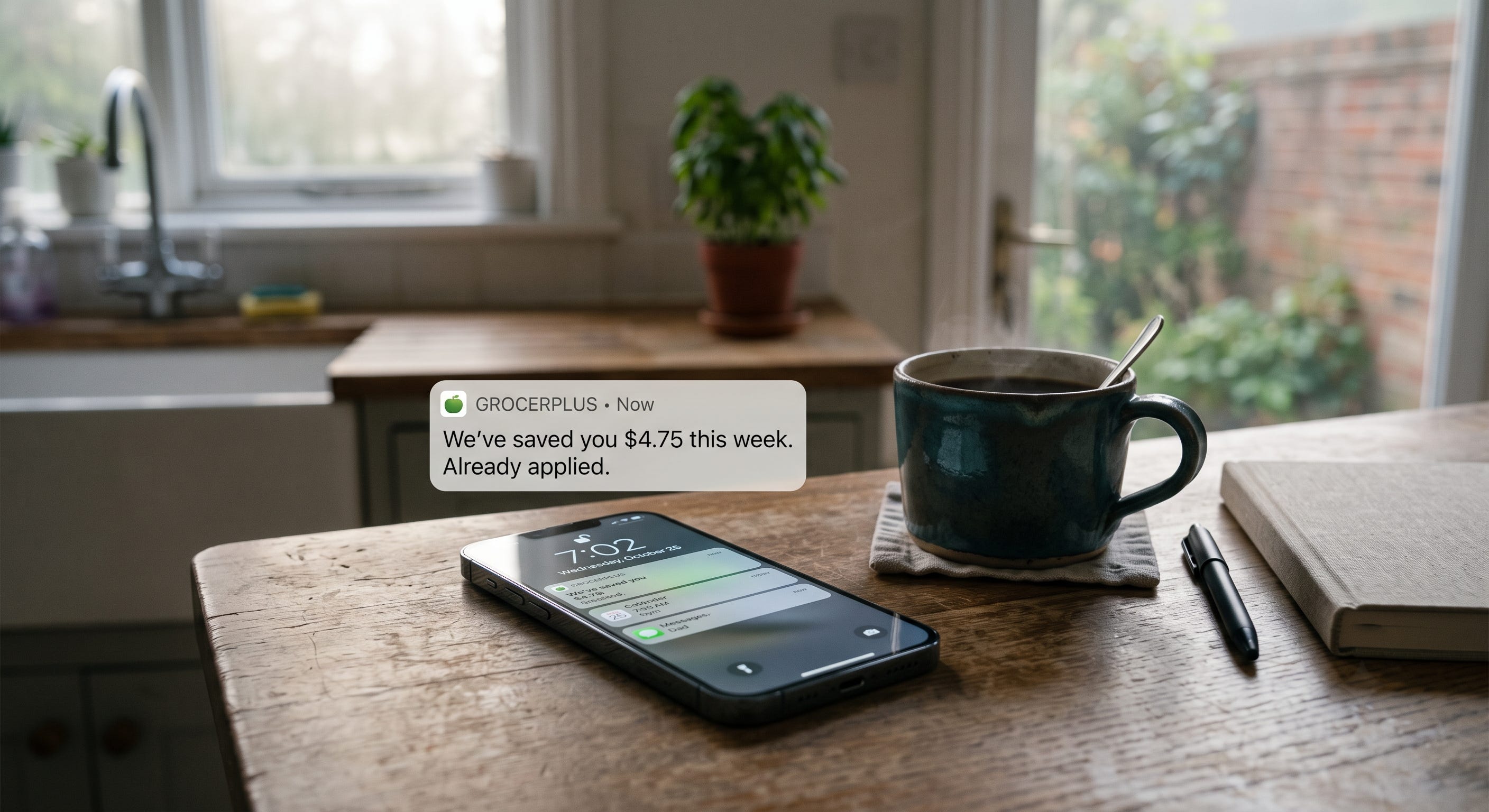
One banner figured out a different greeting. She opens the app and sees: “We’ve saved you $4.75 this week. Already applied.” No clipping. No browsing. The grocer did the work before she even wrote her list.
44% of consumers are leaning harder on coupons and promotions right now.1 That number will not surprise anyone reading this. What should surprise you is how few grocers have figured out what that shopper actually wants from the experience.
Every extra click you make her take is unit volume walking out the door to someone who did the work for her.
What AI Is Actually Good For Here
68% of food retailers surveyed by FMI in early 2026 said they use AI in their business, up from 47% a year ago. Technology spending averaged nearly 2% of total sales in 2025, double what it was in 2024.2
Most of that investment is going into consumer-facing AI: chatbots, search improvements, and product recommendation carousels. These are real applications. None of them are where the unit-volume leverage lives. (Review the Grocery AI Pyramid.)