


This is the second post of a 10-part series: AI Reality Check for Grocers. In case you missed it, here’s the first.
Grocery has an AI problem. Not a shortage of it. A misallocation of it.
Most grocery AI pilots cluster in the same places. Recommendations. Chatbots. Personalized offers. Search relevance. All of it lives comfortably inside the digital experience, where things are measurable, shippable, and easy to demo. It’s where grocery tech budgets go to feel productive.
The numbers back that up. 92% of grocery retailers now use technology, including AI, to deliver personalized shopping and marketing experiences, according to FMI and NielsenIQ.1
None of it is useless. Much of it is genuinely good work. But spend some time inside grocery operations and a different reality becomes hard to ignore: these aren’t the problems that actually define the business. They’re the problems that are easiest to pitch in a boardroom.
The hardest problems in grocery are still stubbornly physical.
Shrink quietly eats into margins every day. The average supermarket runs a shrink rate of around 2-3% of sales2, and 63-65% of that loss is directly caused by a breakdown in store operating best practices, not theft3.
In other words, it’s a process problem, not a security problem. And with razor-thin grocery margins sitting around 1-3%4 range, grocers are essentially losing as much to shrink as they make in profit.
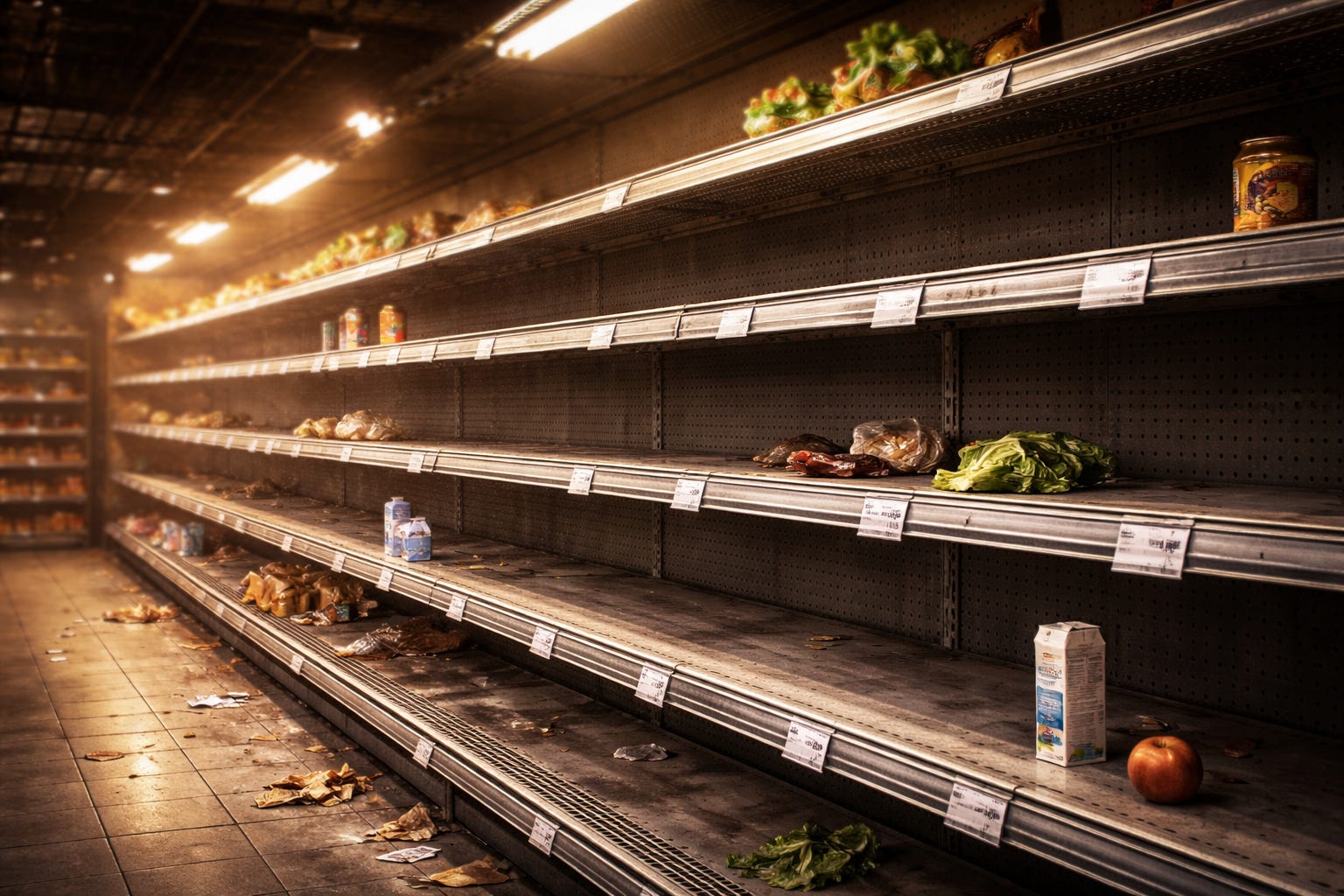
Out-of-stocks are equally punishing. U.S. grocery industry estimates suggest that stockouts cost retailers $15 to $20 billion a year, roughly 3% of total sales5. And the customer damage compounds it. Nearly a third of shoppers will switch grocers after just one poor digital experience6, and an empty shelf counts as one.
A perfectly personalized recommendation doesn’t matter if the item isn’t in stock. A chatbot doesn’t fix a mis-picked order. A better search result is useless if the shelf was empty three hours ago. The digital experience can be flawless, and the store can still be losing.
What’s happening is a structural mismatch. The industry is applying its most advanced technology to its most visible layer, not its most valuable one. And the gap between those two things is wider than most people in the industry want to admit.
Digital is easier to experiment with. It’s centralized. You can ship improvements weekly and see results in clicks and conversion rates. There’s a clean feedback loop, and clean feedback loops attract investment.
Store operations don’t work like that. Improving in-stock rates requires better forecasting, better replenishment, and actual execution at the shelf, often by hourly workers operating under real pressure with inconsistent tooling. Reducing shrink means changing processes, incentives, and sometimes culture. Optimizing labor means navigating real-world constraints that don’t fit neatly into any model and don’t respond well to top-down mandates.
These problems are harder to sell upstairs, slower to prove out, and never going to win a demo. But they're the ones that actually determine whether the business makes money.
Part of this is understandable, honestly. Digital teams own digital surfaces. Vendors sell digital solutions. ROI is easier to attribute when it appears on a dashboard. So the industry keeps investing where measurement is clean, even when impact is not. It’s not malicious. It’s the path of least resistance, dressed up as innovation.
Most stores think they know what's on their shelves. They don't. Inventory accuracy in grocery stores typically falls in the 70-80% range7, and in fresh categories, it can be significantly worse. When items are unavailable, hidden, or damaged, the loss doesn't show up as a system error. It just doesn't show up at all.
The industry is pouring AI into the demand side of the business. The problems that actually keep grocers up at night are on the supply side.
That doesn’t mean AI has no place in operations. Forecasting models can improve order accuracy. Computer vision can help detect out-of-stocks before a customer notices. Labor scheduling can be sharpened with better data and fewer gut calls.
FMI's State of Technology 2025 research found that agentic AI tools are beginning to emerge behind the scenes in grocery, automating inventory replenishment, managing task schedules, and assisting customer service teams8. It's a start. But relative to the size of the problem, it's a small bet getting a fraction of the attention it deserves.
But it requires deeper integration into how stores actually run, which means longer timelines, messier rollouts, and results that don’t always show up cleanly in a 90-day review. So it gets less attention than it deserves.
This is where the next phase gets decided. Not in the app. In the aisle, in the backroom, in the systems that determine whether the product is there at all when the customer reaches for it.
The grocers who figure this out won't be the ones with the flashiest AI demos. They'll be the ones who got quiet, put in the work, and just kept removing friction from the system, one compounding improvement at a time. It won't make for a flashy conference keynote. It'll show up in the P&L.
AI isn't being misapplied because the industry misunderstands it. It's being misapplied because the easiest problems to solve are not the most important ones. And the most important ones require organizational will, not just a good vendor.
AI Reality Check for Grocers is a 10-part series that cuts through the hype and focuses on where AI actually creates value, from the shelf to the supply chain.
“More Than 90% of Shoppers Now Purchase Groceries Both In-Store and Online.” FMI: https://www.fmi.org/newsroom/latest-news/view/2025/02/03/new-fmi---nielseniq-report-explores-grocery-shopping-in-the-digital-age
“The Food Retailing Industry Speaks 2023.” FMI: https://www.fmi.org/forms/store/ProductFormPublic/the-food-retailing-industry-speaks-2023
“National Retail Security Survey 2023.” National Retail Federation: https://nrf.com/research/national-retail-security-survey-2023
“Grocery industry profit margins fall to pre-pandemic levels: FMI.” Grocery Drive: https://www.grocerydive.com/news/grocery-industry-profit-margins-fall-to-pre-pandemic-levels-fmi/720517
“Inventory Distortion Study.” IHL Group: https://www.ihlservices.com/inventory-distortion
“Future of Customer Experience.“ PwC: https://www.pwc.com/us/en/services/consulting/library/consumer-intelligence-series/future-of-customer-experience.html#bad-experiences
“Metrics of Inventory Management 2024.” CAPS Research: https://www.capsresearch.org/blog/posts/2024/october/caps-stats-top-inventory-performance-metrics/
“The State of Technology 2025.” FMI: https://www.fmi.org/forms/store/ProductFormPublic/the-state-technology-2025