


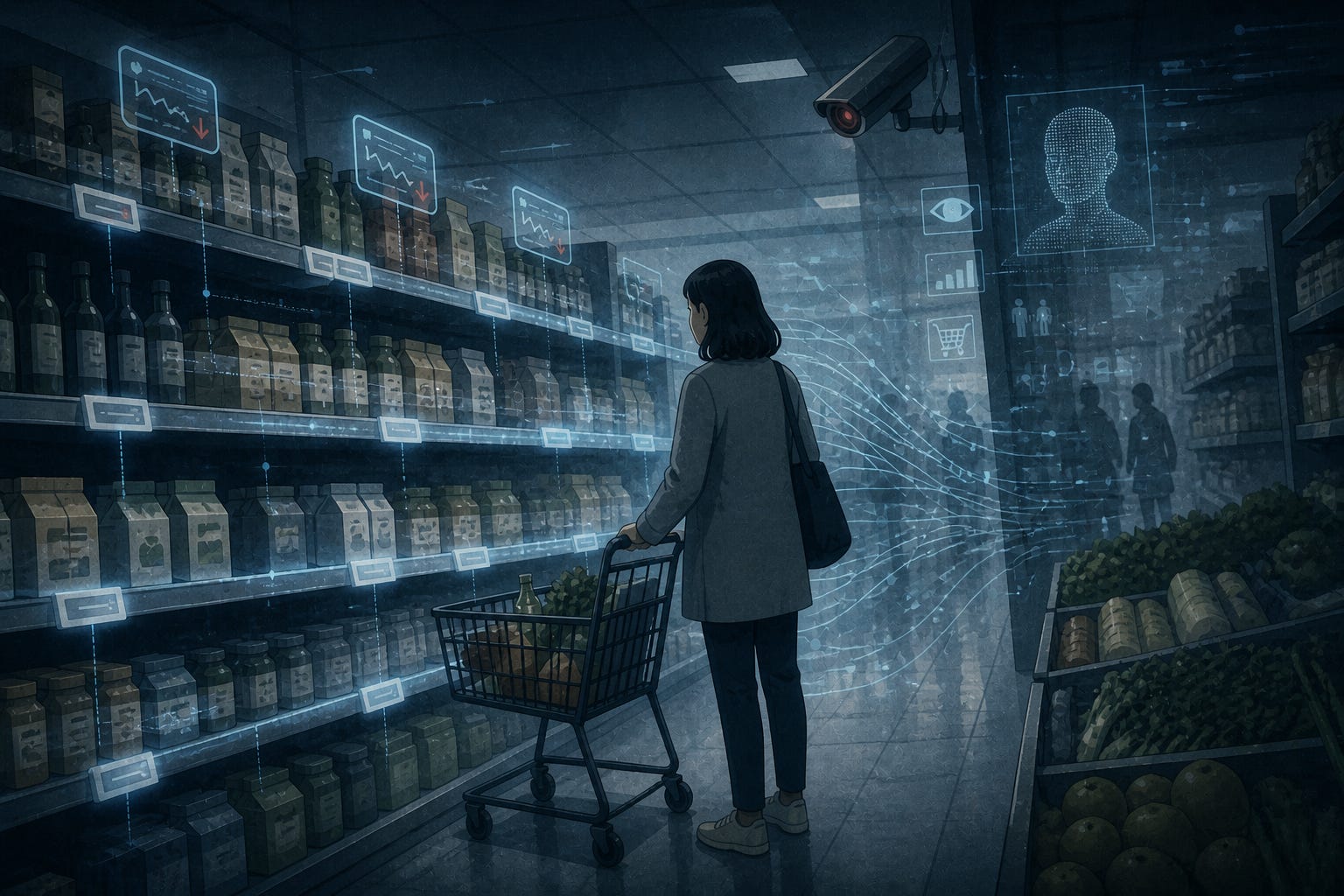
Maryland’s surveillance pricing ban is a gift to grocery operators. Most of them just don’t know it yet.
The law itself isn’t particularly strong. It only covers retailers over 15,000 square feet. It bans price increases based on personal data but says nothing about decreases, which means a retailer could raise baseline prices, selectively discount for targeted shoppers, and stay technically compliant. Loyalty programs are fully exempt. Fines top out at $25,000.
Consumer advocates are already calling it gutted. But it forces a conversation the industry has been avoiding.
Grocery operators have been pouring money into AI that figures out what you’ll pay. Personalization engines. Willingness-to-pay models. Dynamic pricing algorithms that watch your behavior and adjust accordingly. The pitch was compelling: capture more margin from every transaction.
That’s not what AI is for in grocery. That’s not even close.
And now you’re paying a second price for it. Not just legally. Reputationally. Shoppers don’t trust AI in their grocery cart. They’re right not to.
The industry trained them to assume the algorithm is working against them. After watching airlines do it for years, they’re not starting from trust. You built the suspicion. You own it.