


Jennifer Shawgo published a post worth reading on the FMI blog.1 It’s measured, as trade association writing tends to be. Read past the careful framing, though, and AI’s impact on grocers’ loyalty programs is rough.
Her post opens with a simple observation most operators already know: shoppers tell them when they want an exact item, when a substitute is fine, and when they’d rather skip the purchase. Her argument is that as grocers’ AI agents take over list building and purchasing, those one-time choices can become standing instructions. Always buy this coffee. Do not replace this yogurt.
The loyalty programs grocers spent years building are their agents’ starting point. The question is whether that’s enough to keep the basket from moving elsewhere.
Please note: This isn’t an argument for building a better app or racing to deploy an AI agent. It’s an argument for understanding what these agents will reveal about existing loyalty investment before they act on it.
The Habit You’ve Been Calling Loyalty
I’ve made this argument before2, but Shawgo gives it new teeth. Only about 1% of grocery shoppers are genuinely loyal to a single banner.3 The rest are loyal to convenience. The rest are loyal to convenience. The store on the way home. The app already on the phone.
Grocers built loyalty programs on that friction and called it retention. It wasn’t. Shawgo is polite about it: “A familiar app or convenient location may drive repeat trips today.” What she doesn’t say is that the grocer’s own agent will reveal how much of that repeat behavior was friction, not preference.
Frequency tells you what happened. It doesn’t tell you what the shopper will protect once decisions get delegated to AI.
The Rise of the Protected Preference
Shawgo introduces a concept she calls “protected preferences.” When a shopper hands their basket to an AI agent, some items are excluded from the optimization. The shopper names them explicitly, removing them entirely from the agent's discretion.
Protected preference isn’t just a product decision. It’s a routing decision.
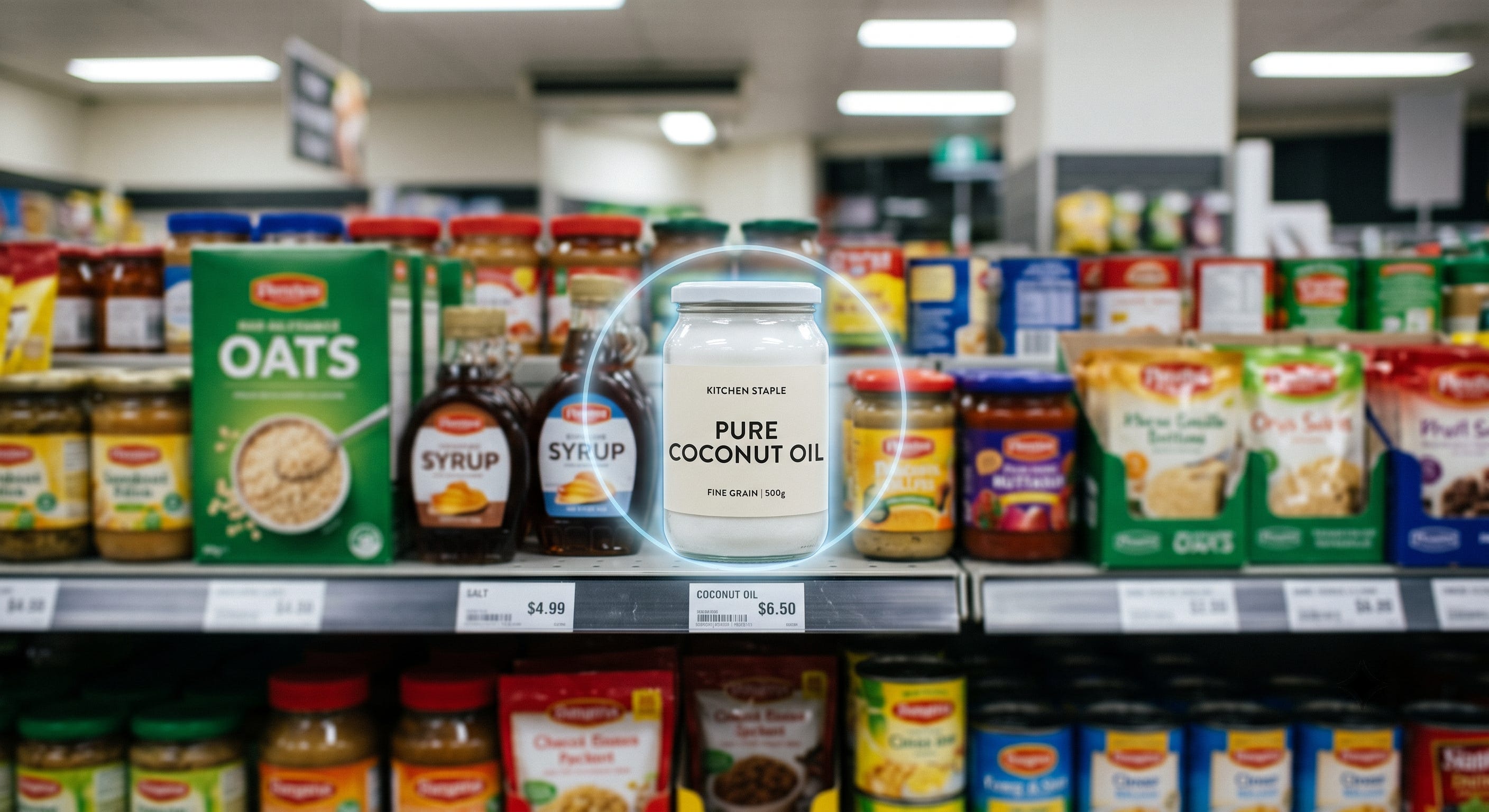
Shawgo lays out the structural logic. A national brand can anchor a product choice within the grocer’s system. Without a protected preference, the grocer’s agent may substitute or optimize around it. A private label product does the opposite. Protecting the item also protects the retailer, because you can only get it in one place. A small share of the basket becomes the reason the entire basket starts at a specific store.
When nothing is protected, the agent optimizes for price, delivery speed, nutrition, or whatever parameter the shopper sets. Grocers aren’t a destination in that world. They’re a default, one algorithm update away from being optimized out.
The Tension Between Suppliers and Retailers
Suppliers and retailers want different instructions embedded in the shopper's agent, and Shawgo is the first trade voice I've seen say it plainly.
A supplier wants the shopper to say: buy this exact product wherever you can fulfill it best. That protects the brand while making the retailer interchangeable.
A retailer wants the shopper to say: start with this store and choose the best products available there. That protects the banner while leaving product selection open.
The strongest outcome protects both. When neither is protected, the grocer's agent fills the gap with its own logic: substitution rules, private label defaults, and algorithmic ranking within the assortment. That's not a loyalty relationship. It's a transaction, and one algorithm update away from losing the trip.
What Your Promotions Are Actually Doing
Shawgo raises a question that should make every trade marketing team uncomfortable: is a promotion building a protected preference, or is it just setting the conditions for replacement?
Did the shopper buy again at full price? Did the product become a named preference? Did the promotion strengthen the retailer relationship, or did the purchase move the moment another deal appeared?
Immediate return on ad spend doesn’t answer any of that. A shopper can instruct the grocer’s agent to substitute if a preferred product exceeds a certain price. The promotion didn’t build preference. It built a condition for replacement.
Promotional mechanics can get encoded directly into the agent’s standing rules. Run enough promotions, and you haven’t built loyalty. You’ve trained the agent to wait for you.
The Product Metric No One Is Tracking
The KPI that actually matters in an agent-mediated market isn’t DAU. It isn’t session length, coupon redemption rate, or monthly active users. Those metrics describe a human interacting with a UI that the agent is increasingly bypassing.
The metric is: what share of your customer’s basket would they protect from agent optimization?
Call it Protected Basket Rate. It belongs on the product roadmap, not in a campaign brief.
Start with a proxy. Pull the top 10% of customers by spend and identify items that have had no substitution history over the past 18 months. No swaps accepted, no alternatives taken, no refund requested. Those are the protected anchors. That’s the baseline Protected Basket Rate. Everything else is at risk.
It’s an approximation. Zero substitution history reflects revealed behavior, not stated preference. But until grocers have agent-level instruction data, it’s the closest signal available.
From there, ask which items those customers would explicitly name in a standing instruction to an AI. Which store visits are habitual, and which are chosen? The gap between those two numbers is the actual vulnerability.
What to Do About It
Shawgo's call to action: understand which products, attributes, and retail experiences shoppers are most likely to protect, then strengthen the value behind those choices.
Here’s what that means in practice.
Stop optimizing the app for engagement. The grocer’s own agent is now making many of those decisions before the shopper ever opens it.
Find the fifteen things a customer would fight their agent to protect. Start with the prepared food section that makes Thursday night work. Look at the private label line where the product and the banner are inseparable. Find the produce department nobody in the market matches.
Those are the protected anchors. Everything else is a commodity. Commodity gets optimized.
Build the thing people hardcode. That’s the job now.
“What Happens to Grocery Loyalty When AI Shapes the Decision.” FMI Blog: http://fmi.org/blog/view/fmi-blog/2026/07/08/what-happens-to-grocery-loyalty-when-ai-shapes-the-decision
“Stop Chasing Loyalty. It’s Already Dead.” Beyond the Cart: https://curtprins.substack.com/p/stop-chasing-loyalty-its-already
“How grocers can embrace the ‘promiscuous shopper’.” Grocery Dive: https://www.grocerydive.com/news/supermarkets-embrace-promiscuous-shopper/817033