


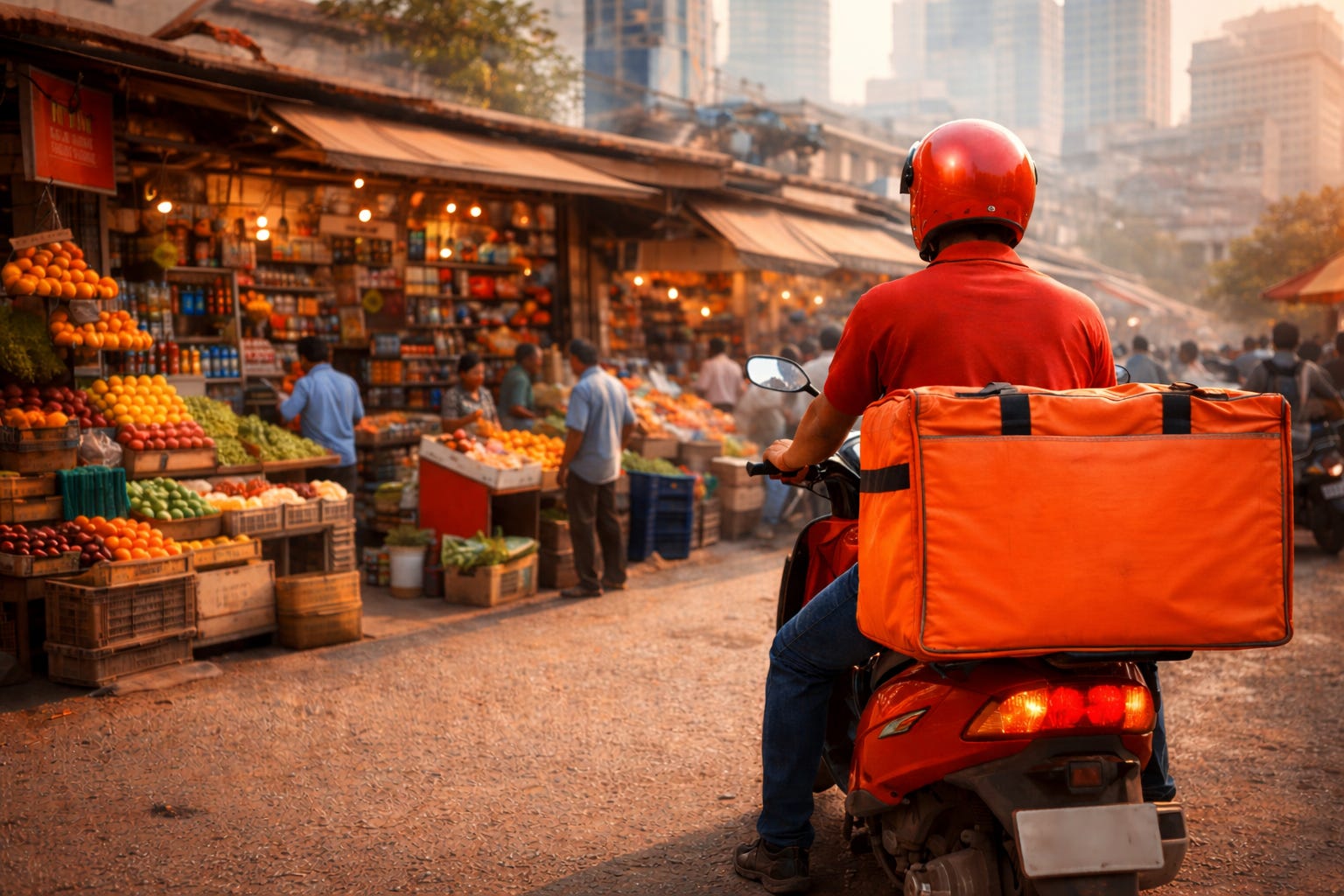
India’s grocery market is quietly teaching the rest of the world a lesson in speed. In just a few years, “quick commerce” (deliveries in 10-30 minutes) has grown to account for a larger portion of online grocery orders in major Indian cities.
This didn’t happen because Indian consumers suddenly became impatient. It happened because the industry redefined convenience to how people actually shop.
Instead of optimizing for next-day delivery or wide assortments, quick-commerce players focused on three things: hyperlocal fulfillment, ruthless SKU discipline, and demand prediction powered by data.
For US grocers, the takeaway isn’t “everyone needs 15-minute delivery tomorrow.” It’s more nuanced and more actionable.
Here are three lessons worth stealing:
#1: Hyperlocal beats centralized at the margin
India’s growth is powered by neighborhood-level micro-fulfillment (“dark stores”). While often not feasible stateside, grocers can experiment by adding similar micro-hubs within their stores in dense markets to cut last-mile costs and delivery times without building entirely new networks.
#2: Convenience is measured in minutes, not windows
Pickup and same-day delivery are table stakes. Grocers who offer ultra-fast delivery for high-frequency items (produce, staples, forgotten essentials) may be enough to keep customers loyal and prevent basket leakage.
#3: Inventory discipline is a competitive weapon
Quick commerce works because inventory is tightly curated and localized. AI-driven demand forecasting keeps fill rates high and waste low. This is a play U.S. grocers can apply immediately, even without faster delivery.
It’s time for US grocers to explore how much speed really matters in their markets.
Source: The Economic Times