


This is the eighth post of a 10-part series: The Marketplace Trap. Here’s the first post for context.
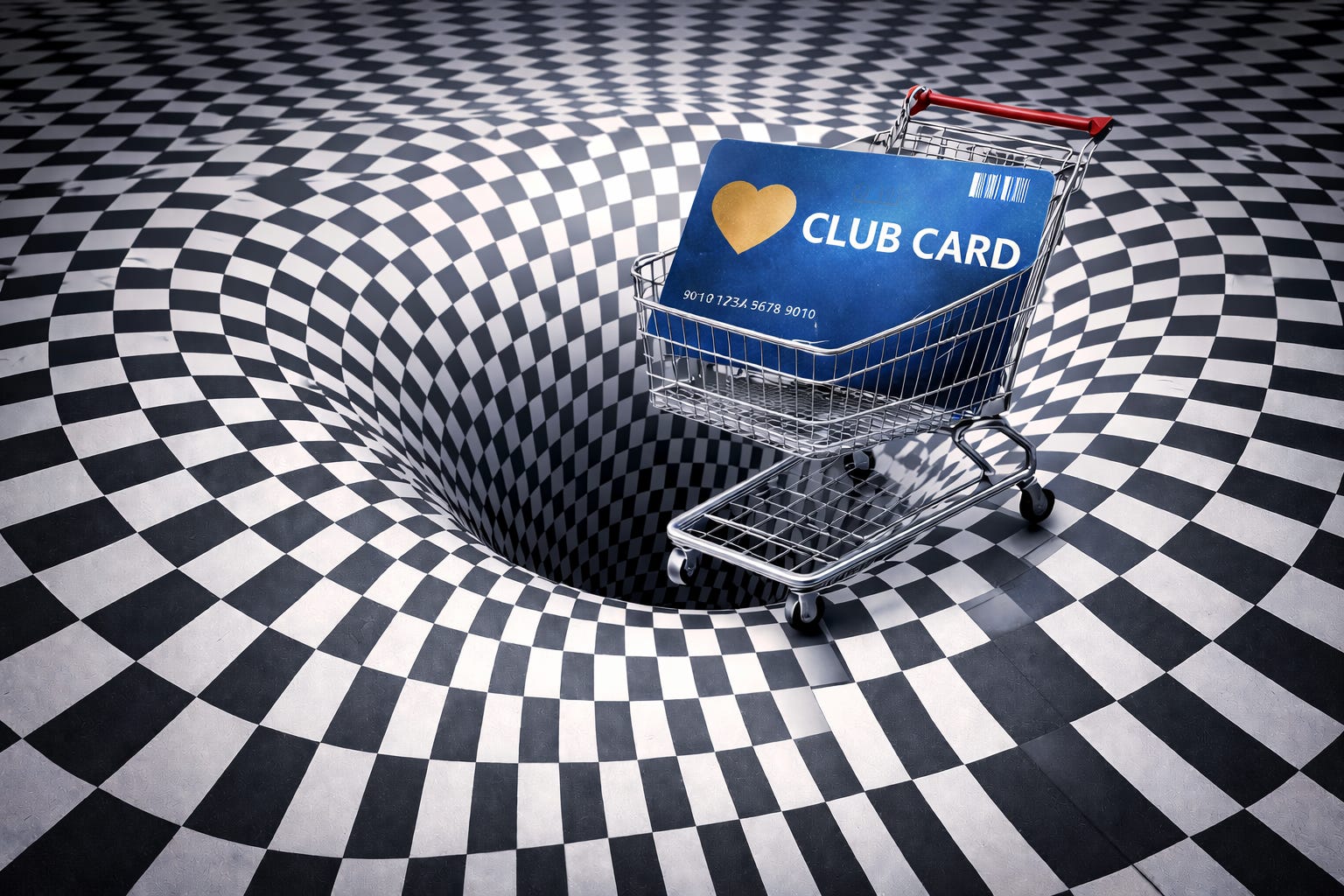
Instacart integrates with grocers’ loyalty programs. Customers link accounts, earn points, get member pricing, and access synchronized promotions. On the surface, it looks like the customer relationship is protected.
That’s the illusion.
Loyalty pricing is a feature. Customer retention is the business. Don't confuse the two.
When a customer builds their weekly trip inside a marketplace app, the marketplace controls discovery, search ranking, sponsored placement, substitution logic, and cross-retailer comparison. The grocer fulfills the order, sure.
But retention isn’t won at fulfillment. It’s won by whoever shaped the basket, influenced brand switching, and determined what surfaced first.
Most operators evaluate marketplace partnerships through an economic lens: incremental sales, margin trade-offs, and loyalty parity. Those metrics matter. But behavior compounds faster than economics.
When the default habit becomes “open the marketplace,” that app becomes the starting point, the comparison engine, the merchandising layer, and the behavioral anchor. That shift is subtle. And it’s powerful.
Here’s the disconnect that doesn’t get talked about enough. A regional grocer sees their transaction data. A marketplace sees cross-banner switching, substitution patterns, and price behavior across thousands of retailers simultaneously.
One sees a slice. One sees the entire ecosystem. That gap isn't malicious. It's structural. And structural advantages compound quietly until they're impossible to close.
National chains have the scale to absorb marketplace dependency. Mid-tier grocers don't. Their edge isn't price or selection. It's density, trust, and local relevance.
But those strengths only compound if the digital journey reinforces them. If it lives somewhere else, those advantages gradually flatten. Not overnight. Over time.
That’s the danger of the loyalty illusion. It feels like control because the points still accrue. But control has already shifted upstream, and most operators don’t notice until recovery gets expensive.
Integrating with a marketplace isn’t irrational. Grocers get incremental volume from customers who’ve already migrated, reduced friction for existing loyalty members, and short-term sales they might otherwise lose entirely. For a mid-tier grocer under margin pressure, that’s a real argument.
But look at what the marketplace gets. Loyalty data that reveals price sensitivity and switching behavior. Behavioral intelligence across every banner they integrate with. The ability to model substitution tolerance, category trade-downs, and cross-retailer price elasticity at scale. That’s not a feature. That’s a structural advantage.
The exchange looks balanced. It isn’t. Grocers get volume. Marketplaces get intelligence. And intelligence compounds in ways that volume doesn’t.
This isn’t an anti-marketplace argument. Marketplaces are effective demand capture engines, and ignoring them is its own kind of mistake. The real question isn’t whether to integrate loyalty. It’s whether integration quietly becomes the operating model.
Marketplaces should be a capture layer. They should not become the control layer.
Mid-tier grocers who figure this out early aren’t playing defense. They’re playing offense. Owned digital, first-party personalization, and control over the starting point of every shopping trip aren’t just defensive moves. They’re competitive advantages that national chains and marketplaces can’t easily replicate.
The grocer who builds that direct relationship at scale, who becomes the default app, the trusted weekly habit, the personalized experience a marketplace can never match, that grocer wins. Not just on margin. On permanence.
Marketplaces should be a capture layer. They should not become the control layer.
Use them tactically. Build internal retail media capabilities. Invest in owned digital aggressively. Treat marketplaces as a channel, not a strategy. The goal isn’t independence for its own sake. It’s ownership.
Because in digital grocery, whoever shapes the basket shapes the future. So here’s the real question:
Are you building a relationship, or just renting access to one?
The Marketplace Trap is a 10-part series on why mid-tier grocers are handing customer ownership to platforms, and what they can do to take it back.
The full series: