


This is the third post in a 5-part series, The Unit Problem, on how grocers can reverse unit volume contraction. Here’s the first.
TL;DR
Three partnerships are forming purchase intent before shoppers walk into any store. GLP-1 telehealth platforms own the basket reorganization moment. Gas prices have made fuel rewards a necessity, not a perk. Menu planning offers a recipe-to-cart builder. Most grocers have not connected to any of them.
Three forces are pulling grocery unit volume out of traditional grocers right now, and none of them are competing retailers.
The first is GLP-1 adoption. The second is gasoline prices. The third is meal planning. Each one is forming purchase intent before shoppers walk into any store or launch an app. Almost no grocer has built the partnerships to intercept all three.
The GLP-1 Basket Is Already Here
16% of consumers report current household GLP-1 use, with another 7% reporting past use, according to McKinsey’s State of Grocery North America 20261. That is not a niche population. That is a meaningful share of grocery-buying households that have reorganized what goes in their carts.
The category shift is specific. After GLP-1 adoption, spending falls in chips, sweet bakery, soft drinks, cookies, candy, and desserts. It rises in nutrition bars, meat snacks, fresh produce, and yogurt. A grocer’s center store is built for the basket these shoppers are actively dismantling. The perimeter is where their spend is going.
The question is not whether to respond. It is whether you own the moment when new GLP-1 users reorganize their grocery identity, or watch it happen from a distance.
That moment happens exactly once per adopter. The first four to six weeks after starting the medication, eating patterns are disrupted, and old purchasing habits break down. Whoever reaches them in that window with a relevant, easy-to-execute basket owns their grocery behavior going forward.
The telehealth platforms that prescribe and support GLP-1 users (Noom, Hims & Hers, Ro, and Weight Watchers) have direct relationships with these shoppers at exactly that moment. A co-branded nutrition program, where new subscribers get recipe ideas and curated digital baskets of high-protein, low-sugar, nutrient-dense items available at your stores, puts you in that window.
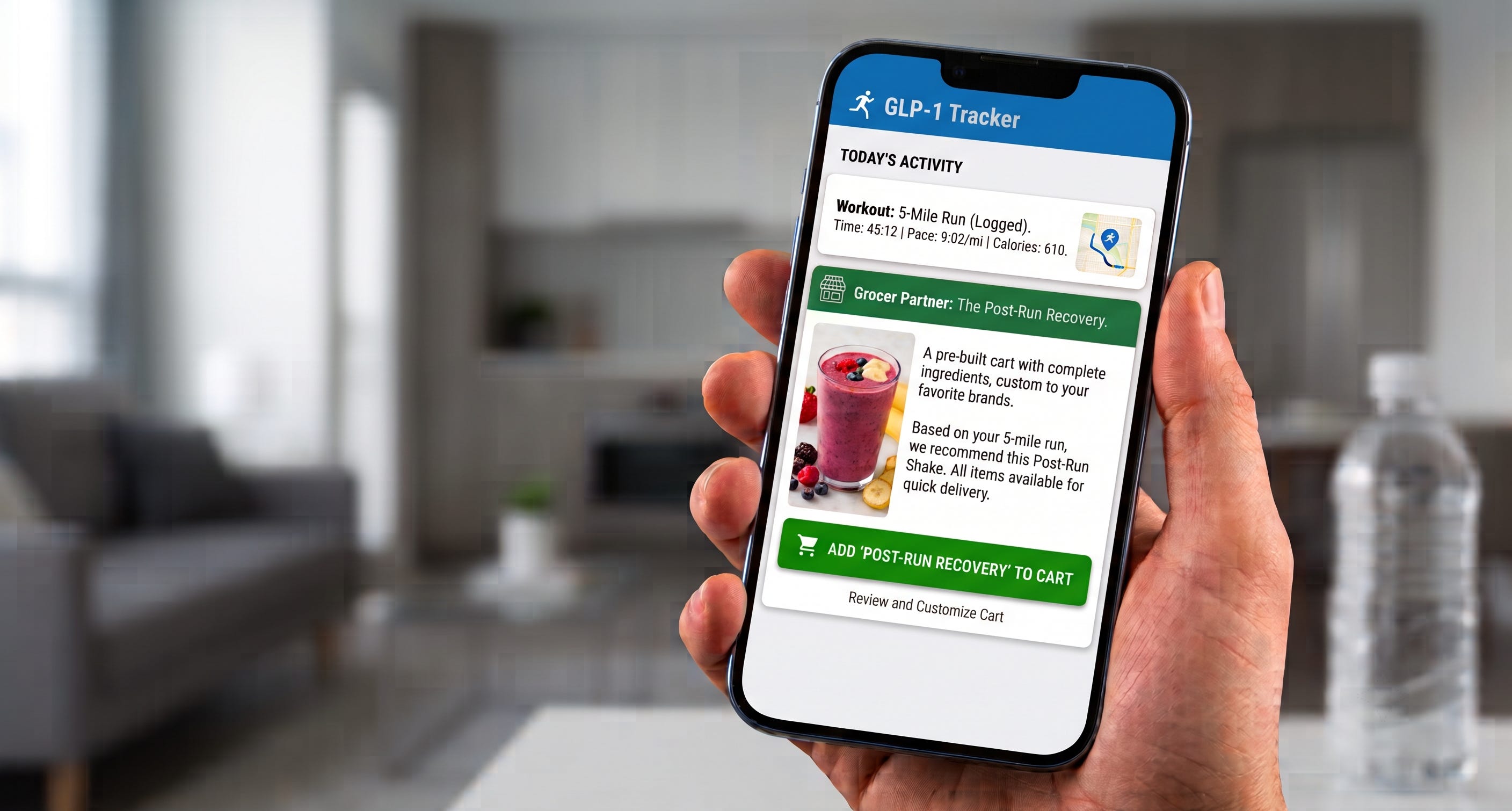
The telehealth partner promotes heavily during onboarding and ongoing care. The grocer handles the assortment, the loyalty integration, and weekly basket nudges calibrated to what a GLP-1 household actually buys.
ShopRite has already moved here, launching wellness kits for GLP-1 patients to bridge the gap between pharmacy and nutrition. A wellness kit is a start.
The co-branded basket model with a telehealth platform is the more ambitious version, and it is still emerging. No operator has built it at scale. But the conversation with a platform like Noom or Ro is worth starting now, before a competitor does.
Nearly 90% of grocers expect to increase shelf space for high-protein products by more than 10% over the next two to three years, according to McKinsey. Shelf space without a demand generation strategy is just inventory cost. The telehealth partnership is the acquisition channel that fills the expanded shelf with actual shoppers.
The Gas Price Problem Is Solvable
Kroger and other national grocers have run a fuel rewards program for twenty years. Most operators at every other tier have not. When gas prices climbed over 20% across the US in March 2026, that gap is no longer just a missed loyalty feature. It is a weekly pain point shoppers feel every time they fill up, and grocers that address it directly earn goodwill a competitor sitting on the sidelines cannot match.
It’s not a complicated idea. Every dollar spent in the store earns fuel cents per gallon that’s redeemable at their stations or within a partner fuel network. A loyalty card or app QR code handles redemption at the pump. Shoppers connect the grocery trip directly to relief at the gas station. That connection changes the calculus on trip frequency, driving distance, and banner loyalty.
Gas at 20% above last year makes fuel rewards less of a perk and more of a response. A grocer without a fuel reward is invisible on the issue shoppers care about most right now.
"We know gas is expensive. Shop here and we'll help." Simple, direct, and emotionally resonant for a household running the numbers on where to spend this week.
The Meal Planning Play
The technology that turns recipe content into grocery baskets exists. Many grocers have not plugged into it.
Chicory runs a shoppable recipe network across more than 5,200 food blogs and recipe sites. Its “Get Ingredients” button sits on content ranging from Martha Stewart to thousands of independent food bloggers. Shoppers find a recipe, click the button, select a preferred retailer, and the full ingredient list populates in that grocer’s digital cart. Chicory is already integrated with more than 70 retailers, including Albertsons, Giant Eagle, and Wakefern.
The integration requires no proprietary engineering and no national platform deal. There is no good excuse for not having it. The playbook already exists. The content network already exists. And the shopper behavior is already there.
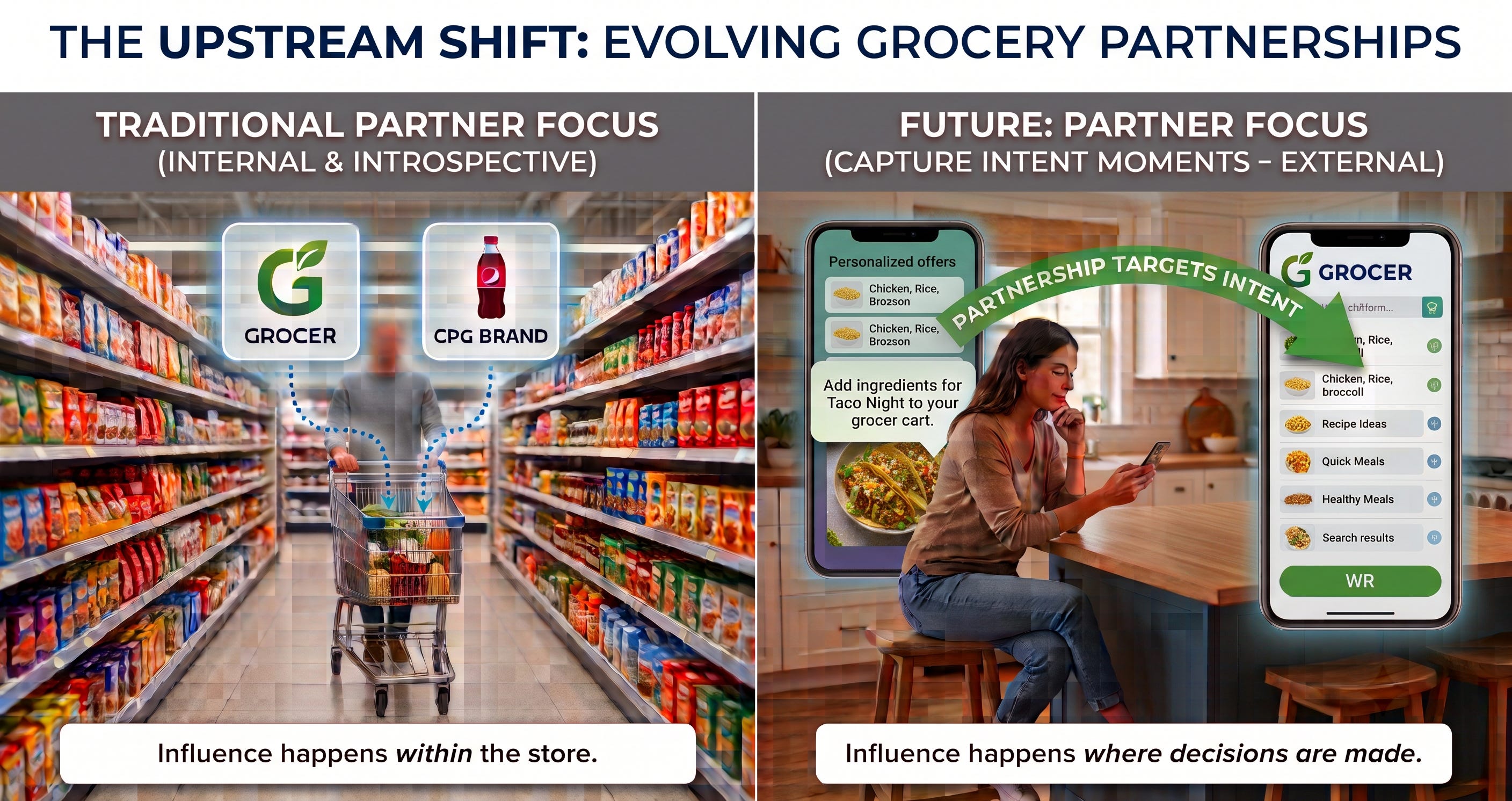
Shoppers planning a meal add the complete ingredient list. Shoppers browsing without a meal anchor add items they remember they need. When the basket is built around a meal, every item belongs. There is nothing to prune.
This is not an emerging opportunity. It is an available one. The question is why more grocers have not taken it.
The shopper's next basket is being built right now, on a telehealth platform, at a gas pump, on a recipe site. Most won't be. Will you?
The Unit Problem is a five-part series on why US grocery unit volume is falling and what traditional grocers can actually do about it. Next we'll look at the bottom of the purchase funnel.
“The State of Grocery North America 2026.” McKinsey: https://www.mckinsey.com/industries/retail/our-insights/the-state-of-grocery-north-america