


This is the first post in a 5-part series, The Unit Problem, on how grocers can reverse unit volume contraction.
TL;DR
Grocery unit volumes are down 1.8% year over year, and inflation can no longer hide it. Shoppers are buying less, trading down, and splitting trips across multiple retailers. The grocers that pull ahead will win on trip frequency and trust, not just price.
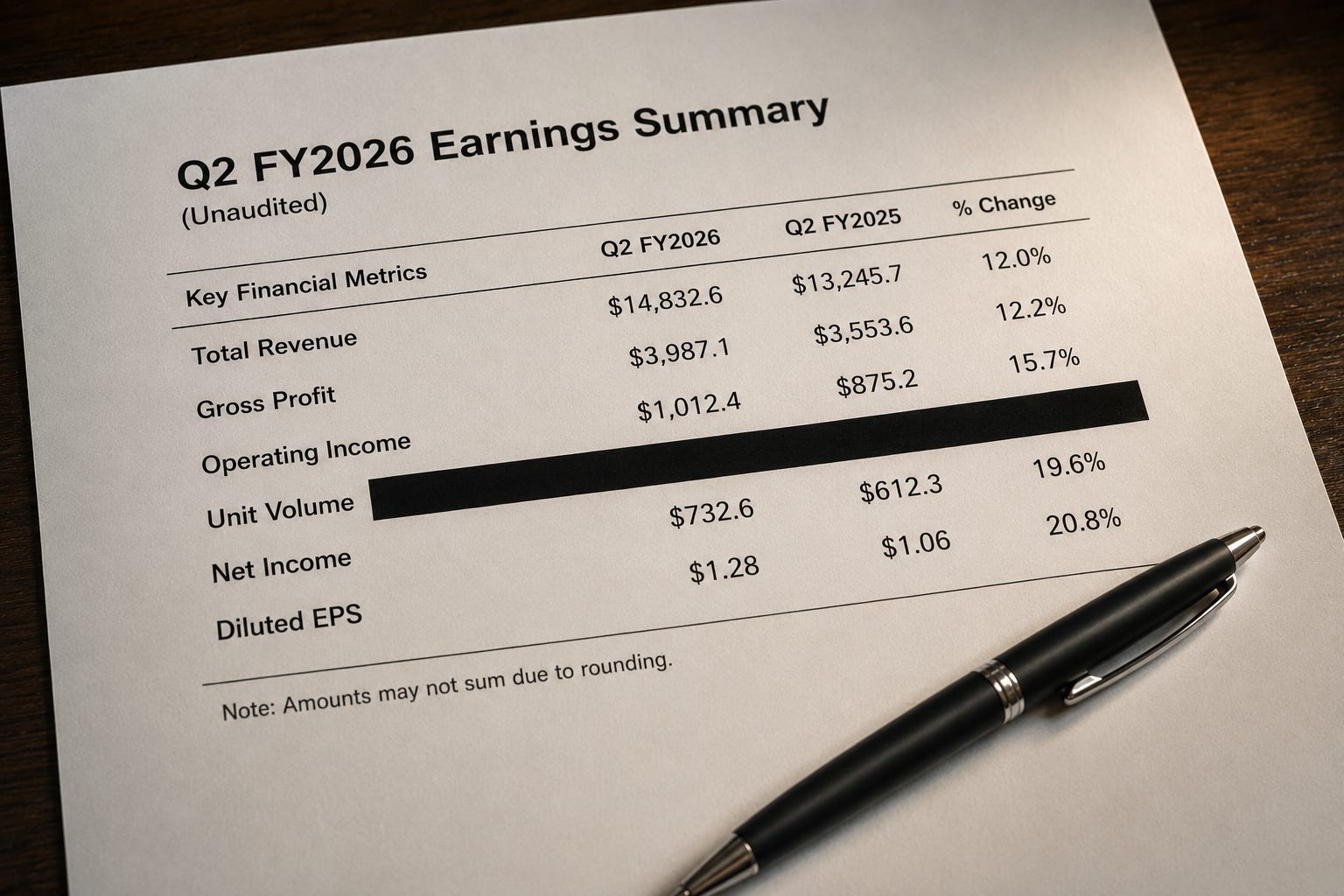
There is a metric that will never appear on a grocer’s financial report: unit sales. That absence is not an oversight.
When unit volume contracts, grocers’ thin 1% to 3% profit margins get squeezed because fixed costs are spread across fewer items moving through checkout. So the reporting machinery moves to protect the narrative. Identical sales growth, propped up by inflation, leads the earnings call. Basket depth gets bundled into "average ticket size." Raw unit losses get buried in qualitative management discussion. The financials look stable while the volume story quietly deteriorates.
The Numbers Grocers Aren't Showing
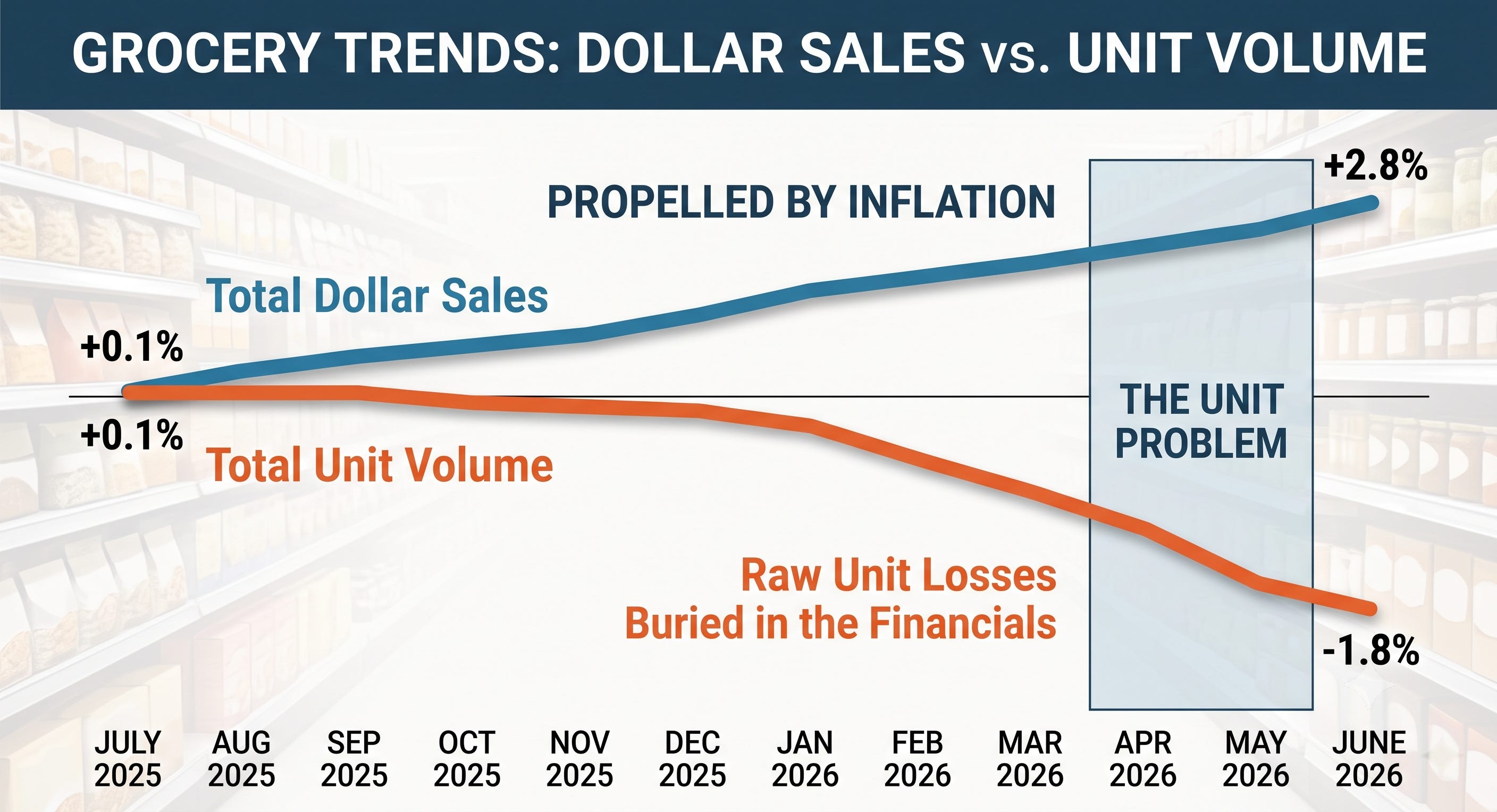
Bain & Company went looking for that volume story in their analysis of NielsenIQ’s data1. Unit growth went negative in mid-2025. Then in February 2026 it stepped down sharply enough to pull actual dollar sales lower across the US. By June 2026, units were down 1.8% year over year. Twelve months earlier, they were up 0.1%. That is a nearly two-point deterioration in a single year, and it happened while prices were still climbing 2% to 3%.
Inflation did not cause the unit decline. Inflation was supposed to mask it. It stopped working.