TL;DR
Grocery pilots survive because nobody decides to end them, and the cheapest time to cut one is before next year’s budget locks. At FMI’s 2.1% average net margin, a $500,000 pilot needs $23.8 million in new sales to recover. Inventory your pilots now, hold a kill meeting in early December, and publish the 2027 list with the four checks before December 19.
Nobody cancels a grocery tech pilot. They stop mentioning it. The self-checkout camera test slides from the quarterly review to a footnote, and the shelf-scanning robot keeps its lease, its project manager, and its line in the vendor contract. Nobody decided anything. The pilot outlived the attention that launched it.
A pilot you ignore keeps draining margin, and the cost grows until someone runs the numbers. Nobody puts the spend in the quarterly review, so the pilot looks free while it runs. When margin tightens, leadership will ask why, and the answer will sit in a line item nobody questioned.
The cheapest time to cut a pilot is before next year’s budget locks. Grocery companies build much of their next-year plan in the weeks around the holidays. Every project still running then gets funded by default. A cut in November costs a conversation. A cut in April costs a headcount plan and a vendor renewal.
Grocery has more dead pilots than most categories
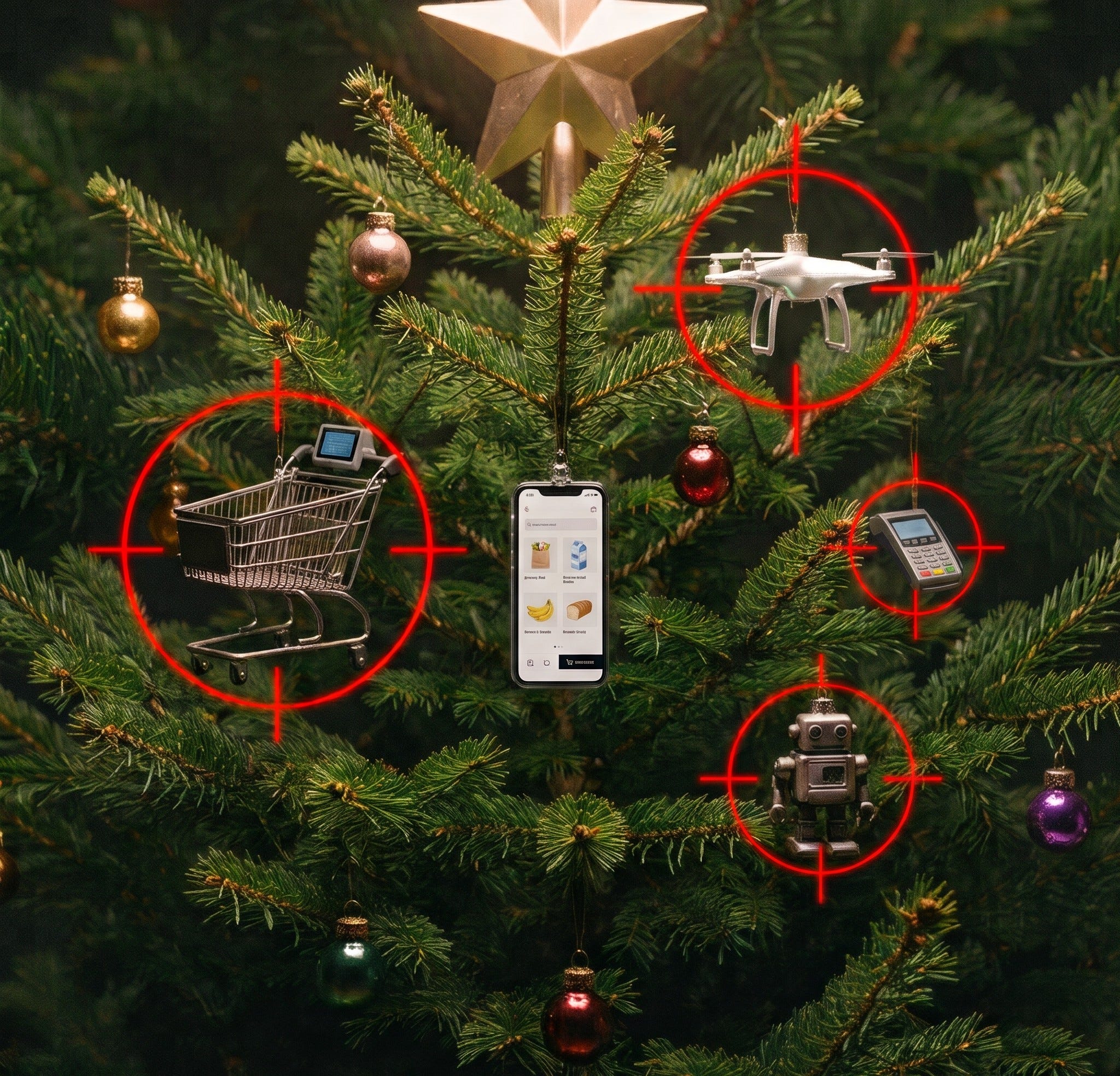
Grocers accumulate pilots faster than most food-selling businesses. Digital shelf labels, computer vision for inventory, scan-and-go apps, personalized offers, delivery partnerships, retail media trials, and loyalty experiments all arrive with the same promise. Each one gets a test in a handful of stores, a press release, and a team.
The pilot stores are where the trouble starts. They get extra attention, extra staffing, and a manager who wants the test to work. The results look good, and the team writes a memo about a rollout that never comes, because the wider chain was never part of the plan.
What a dud costs a grocer
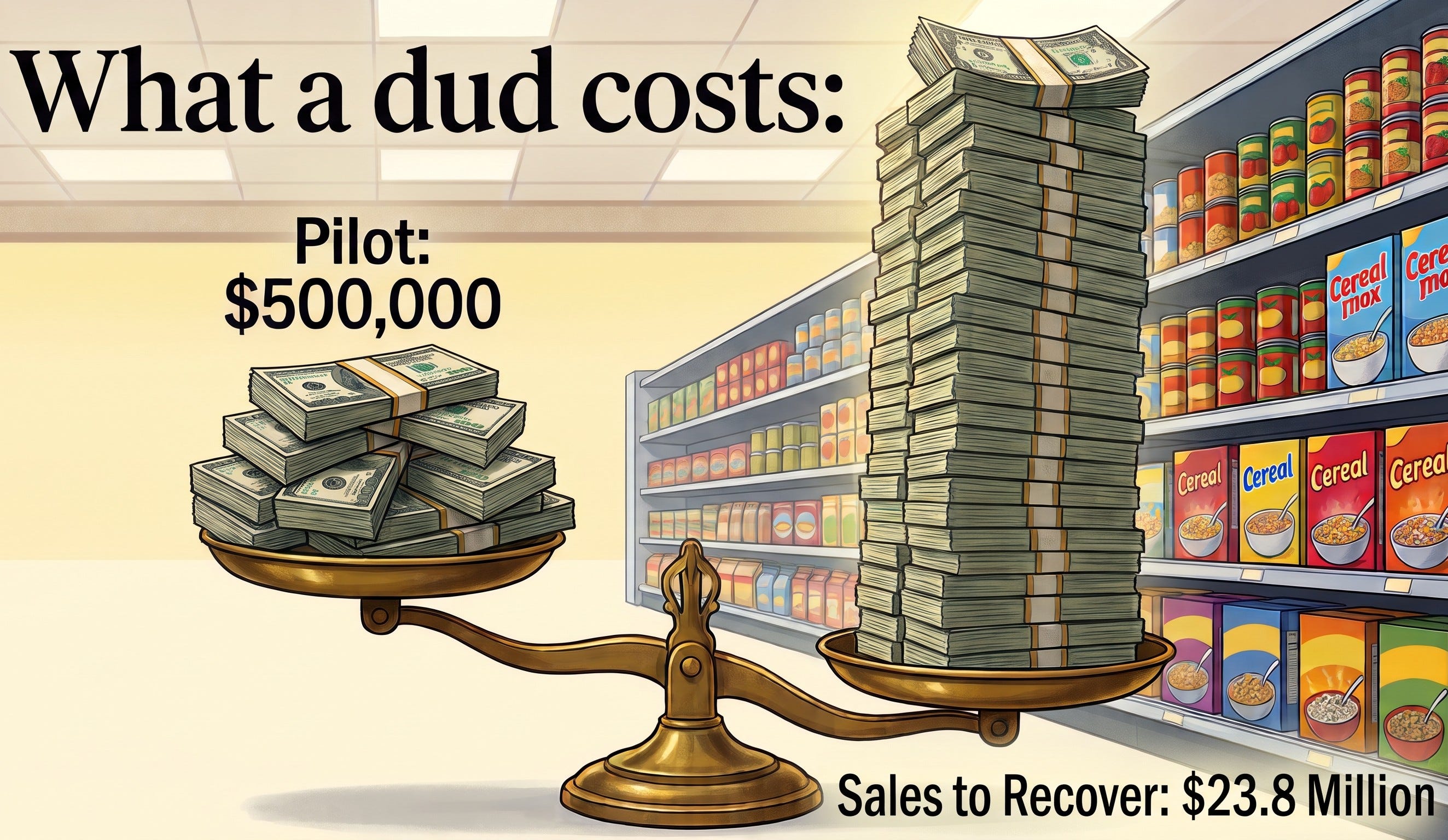
Most of the pilots on this list belong to regional chains, not giants. A chain with $1 billion to $7 billion in revenue typically nets 2.1%1, so a failed pilot hurts fast. At that margin, writing off a $500,000 pilot requires $23.8 million in new sales to recover, roughly two-thirds of an average supermarket’s annual sales.
A larger project costs more to recover. A $2.5 million automation initiative requires $119 million in added sales. For a $2 billion grocer, that is about 6% of annual turnover.