


TL;DR
Many grocery apps have 4.8-star ratings because their list features are largely ignored. Grocers turned them into ad platforms, abandoned household intelligence, and built walls around their data to protect margin. The grocery list is the highest-converting touchpoint in retail e-commerce, and nobody has properly built on it. Amazon can’t fix it because Amazon is the conflict. The winner will be a neutral platform that already owns the meal planning moment before any grocer gets near the session.
I laughed hard when I saw this 80 yo brass mechanical grocery list on Reddit. It’s pre-loaded with 40 categories, and you slide the little tabs left to flag what you need. There’s no battery, no sync issues, and no sponsored results pushing a Mongolian butter brand you’ve never heard of before. You walk the store, you slide the tabs back as you go, and you’re done.
Then I stopped laughing, and PTSD set in.
I spent months working on a few grocery list pilots for a national grocer. We had beautiful designs, detailed stakeholder decks, and a product manager (me) who genuinely believed we were going to change how households shop. Every project cratered. The plan was solid. The technology wasn't there. Other teams weren't either.
That brass tab-slider from the 1940s still works better than anything I’ve seen demoed since. It had two states per item, no account to create, and no location permissions to dismiss.
The biggest competitor in grocery list tech isn't Instacart. It isn’t an 80-year-old piece of brass. It's a pen and the back of an envelope.
The Kroger app has a 4.8-star rating. So does Walmart Grocery. Instacart sits at 4.9. These apps do a lot of things: weekly ads, coupons, pharmacy, fuel points, order tracking. And yet the grocery list, the feature every household actually uses every week, is the worst part of all of them. A 4.8 with a broken core feature means the bar for grocery apps is pen and paper.
We are using 2010-era digital checklists in an era of predictive AI, and giving them five stars because they didn’t make us cry in the cereal aisle.
The Friction Is the Feature (And That’s the Problem)
Picture Tuesday evening. You’re standing in your kitchen, halfway through prepping chicken piccata. You’ve got your phone out because you remembered you need capers, and now you’re trying to add them to your grocery app while one hand is covered in lemon juice.
You open the app. It wants your location. You dismiss the prompt. You tap the search bar. The keyboard slides up and covers the “Add Item” field. You tap again. You type “capers.” The app serves you four sponsored results: a brand you’ve never heard of, a bulk 5-pound jar from a restaurant supplier, some kind of artichoke antipasto, and buried fourth, the Goya 4-ounce jar you actually buy.
By the time you’ve added the item, you’ve overcooked the chicken.
That’s not an edge case. That’s grocery list apps performing exactly as designed, which is to say, poorly. It compounds: laggy household sync, dead wifi mid-aisle, item entries that default to wrong sizes, and zero awareness that you just cooked a meal and already know what you need.
Grocery apps were never built around the actual moment of use.
The Ad-Tech Hijack
Here’s what happened. Grocers looked at their apps, saw a captive audience with purchase intent, and turned them into billboards.
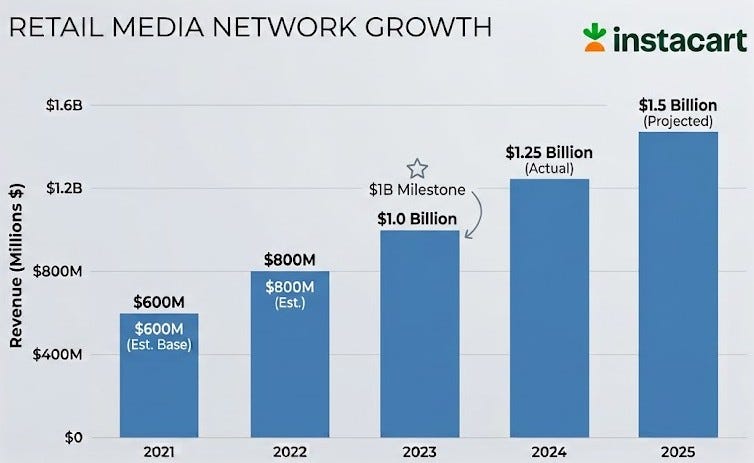
Retail Media Networks now generate high-margin billions. Instacart’s retail media arm pulled in $1 billion in 2023. Every major grocer is right behind them. CPG brands pay serious money to sit at the top of your search results.
The operator math is easy. The shopper math is what you feel every time you open the app.
When you type “butter” into your grocery app and get three sponsored results for brands you don’t use, in sizes you don’t buy, sorted by who paid the most, the app has stopped working for you. It’s working against you.
This is where utility breaks down. The grocery list is the highest-intent moment in consumer retail. You’re not browsing. You’re not impulse-buying. You know what you want. And the app’s job, at that exact moment, has been flipped from “find what you want” to “show you what someone else paid to show you.”
Every sponsored result injected into a list search is a direct tax on the person who opened the app. It adds time, creates confusion, and often forces a second search. The grocer has monetized user frustration.
Brain-Dead “Household Intelligence”
There’s a concept in software called “cold start.” No data on the user, start from scratch. It’s a well-known problem in recommendation systems. Netflix solved it over a decade ago.
Every time you open a grocery app, it cold-starts.
It doesn’t know your household goes through a gallon of 2% milk every five days. It doesn’t know you buy coffee filters in 100-count packages and you’re probably running low. It doesn’t know you’ve ordered chicken thighs every third week for eight months.
It has your order history, timestamps, and frequency data. And it does nothing with any of it.
The average American household shops from a stable repertoire of roughly 150 to 300 SKUs, with modest seasonal variation.1 Grocery shopping is almost entirely cyclical, and yet every session starts the same way: blank list, search bar, waiting for you to remember everything yourself.
Recipe integration makes this worse. Most apps that offer recipe-to-list functionality scale the ingredients and then dump them into your list without checking what you already have. There’s no pantry state, and no “skip if in stock” toggle. You get told to buy paprika when you have three jars at home.
The Walled Garden Fallacy
Grocers build their apps on an assumption that is empirically false: that you shop with them exclusively.
Nobody does this. The actual pattern for most American households looks more like Costco for paper goods, Trader Joe’s for snacks and seasonal items, the local grocer for produce and fresh meat, and maybe an ethnic grocery or farmers market on top of that. Four or five stores for a single household’s weekly food supply.2 None of those stores share data. None of their apps talk to each other.
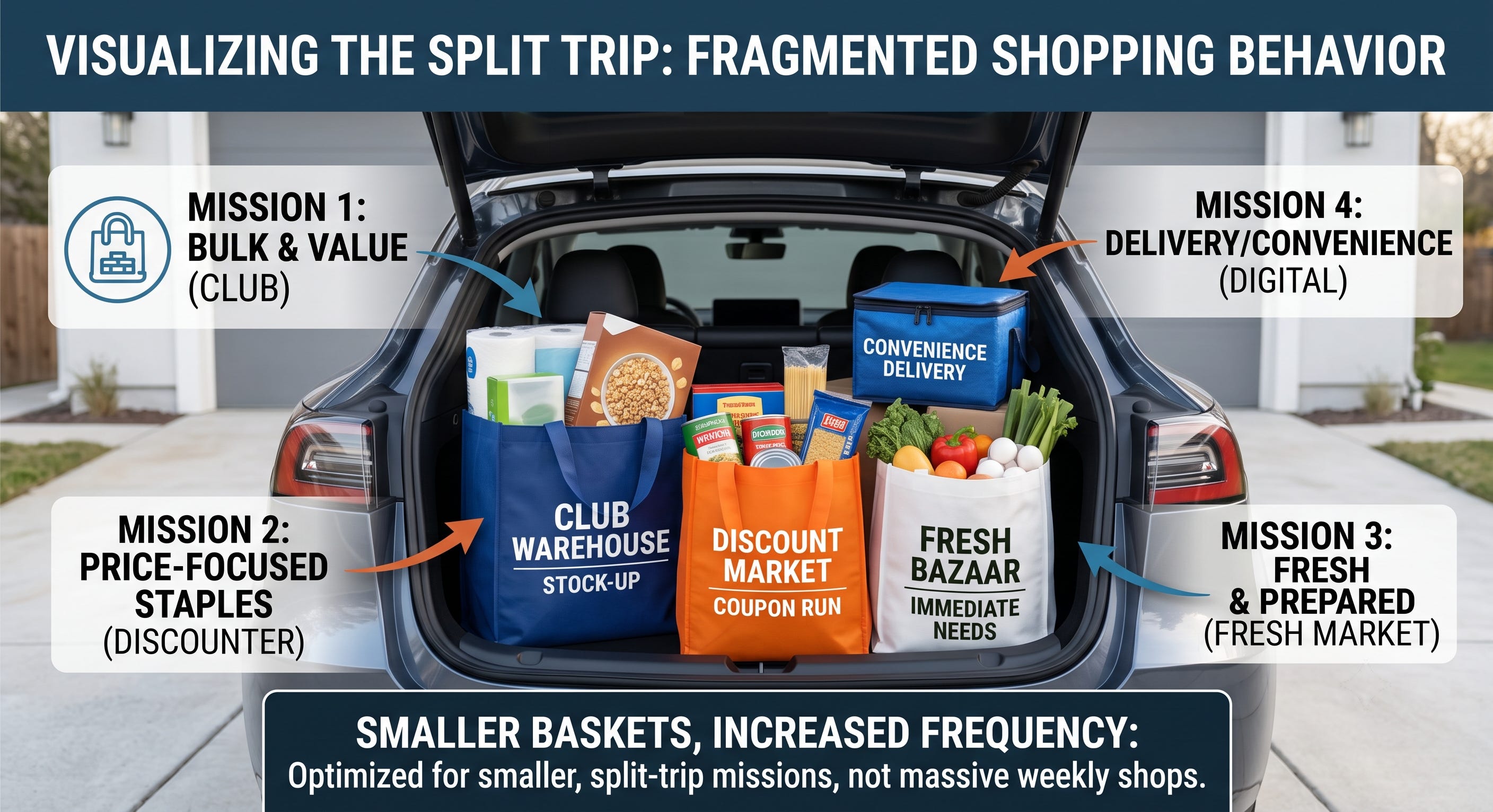
The grocer’s app assumes 100% wallet share. Industry estimates put the typical primary grocer’s actual share of household food spend closer to 16% to 25%,3 directionally, though that number varies significantly by market. A rural household with one dominant grocer nearby looks nothing like an urban household splitting trips between Whole Foods, Trader Joe’s, and a neighborhood butcher.
Third-party apps have tried to solve this. AnyList, OurGroceries, and others position themselves as store-agnostic. The problem is that without deep API integration, they’re just digital paper. They can’t access past orders, real-time inventory, or fulfillment routing. AnyList didn’t fail because the interface was bad. It stalled because a great list app without grocers’ data connections is a notepad with pretty UX.
Grocer APIs, where they exist, are proprietary, poorly documented, and locked behind partnerships that protect the grocer’s own app. It's not negligence. Locked APIs are a margin protection strategy.
An open standard connecting a neutral list app to Kroger, Publix, and H-E-B would make price comparison trivially easy, and that destroys margin. The wall stays up because the wall protects the business model.
Which also means no grocer fixes this voluntarily. Any grocer that opens its API to a neutral list platform is handing a price comparison tool to every household it serves. That’s not a product decision. It’s a business model decision, and the economics run the wrong way.
The Holy Grail
Here’s why any of this matters beyond UX pedantry.
The grocery list is the single most valuable piece of commercial real estate in retail e-commerce, and nobody has properly built on it.
Think about what the list actually represents. You built it at home, before you opened any app, and before any brand got near you. The person who puts capers on a list is going to buy capers. That’s not true of someone who sees a banner ad for capers and maybe clicks through. List conversion isn’t browse conversion. It’s not even close.
That said, this moment is already being contested. Grocer apps push weekly circular notifications. Recipe features inside store apps seed the list with sponsored ingredients. Alexa adds items to an Amazon list by default.
The window of opportunity is real, but it's closing. Whoever captures the list-building session early enough, before the shopper opens the grocer’s app, owns the uncontaminated version of that intent. That window is the prize.
Marketers have a term for the moment a consumer first becomes aware of a need: Zero Moment of Truth. Google coined it in 2011 and built much of its search advertising model around it.
The grocery list is earlier than that. It’s pre-ZMOT: the moment a household commits to a purchase based entirely on internal knowledge of their own consumption, before any brand or algorithm weighs in. The app that lives at that moment owns the most intimate commercial relationship in consumer retail.
Whoever controls the grocery list controls the basket. Whoever controls the basket controls grocery e-commerce.
The obvious question is: why hasn't anybody won this yet?
Amazon is the most credible incumbent answer. Subscribe and Save is a crude but functional version of replenishment cycle intelligence. Alexa captures voice-driven intent at the moment it forms. Whole Foods gives Amazon purchase history across a major grocery format. If anyone had the data and distribution to build what I’m describing, it’s Amazon.
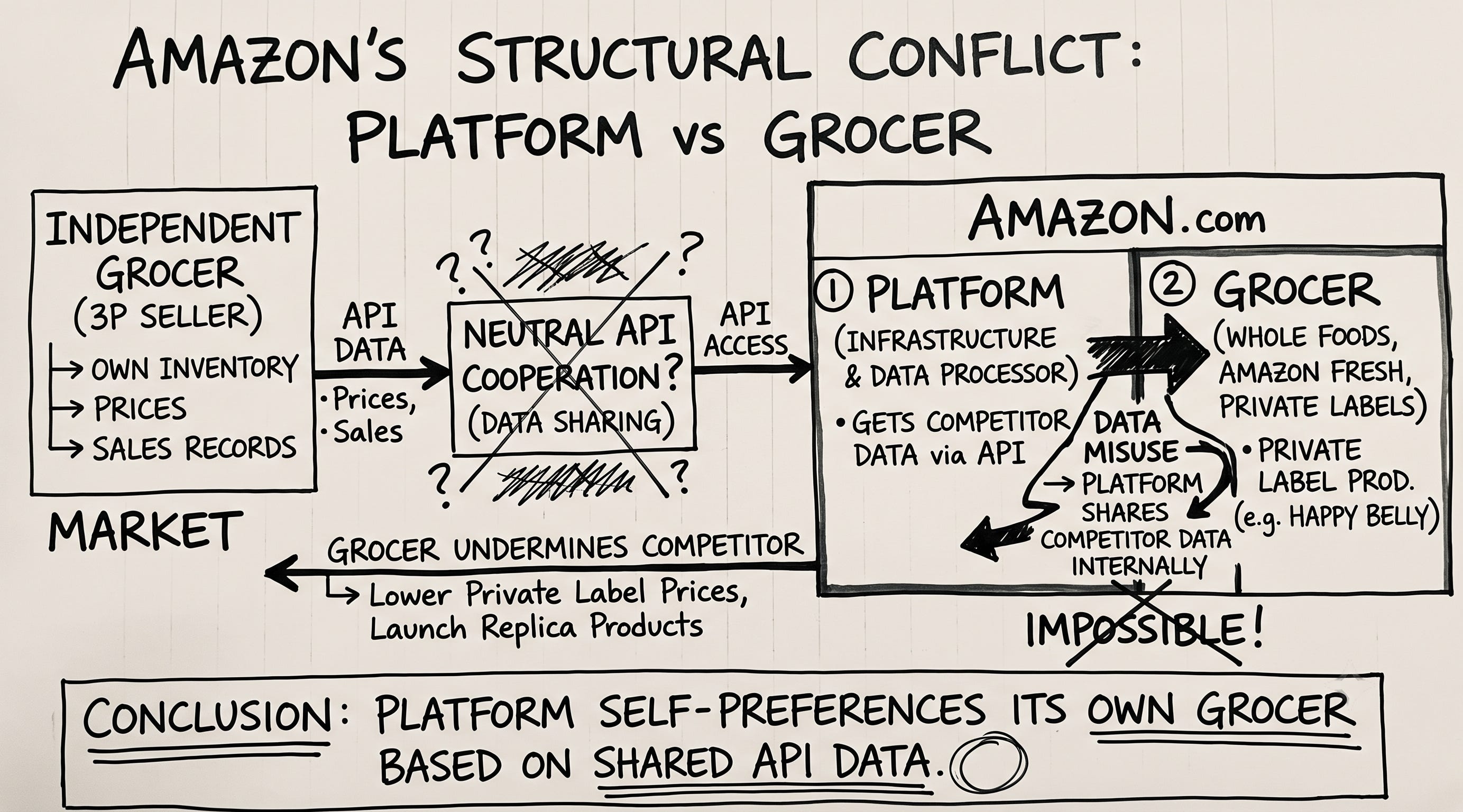
But Amazon can’t be the neutral layer, because Amazon is a grocer competing on its own platform. Kroger won’t open their APIs to a company that sells groceries in direct competition with them. A neutral third party without that conflict is the only entity grocers have any rational incentive to cooperate with, which is exactly why the winner here doesn’t look like a retailer at all.
It looks like a company that already owns the upstream moment. Think of a meal planning platform with tens of millions of active households, or a recipe app that lives on your phone before you ever think about where to shop. Any service that captures what your household intends to eat this week, before any grocer gets near the session, is sitting on the most valuable real estate in grocery commerce.
That company, with the right API partnerships, becomes the demand layer that sits above the entire fragmented grocery ecosystem.
The platform that wins will be store-agnostic, routing list items to the lowest-cost or fastest fulfillment option across your actual shopping ecosystem.
It will have genuine household intelligence that learns consumption cycles, suggests replenishment before you run out, and connects meal plans to list generation without making you own three jars of paprika. It makes money at the list-building stage, through placement that fits the context instead of hijacking it. Suggest the off-brand olive oil when I’m browsing, not when I’ve already typed in the one I want.
These platforms exist. The deep grocer partnerships don't.
The person standing in aisle nine, consulting their phone at 6:47 PM on a Wednesday, is not browsing. They’re executing. Execution requires frictionless retrieval, not an ad for a product they didn’t ask for.
The prediction models exist. The API infrastructure can be built. The household data is sitting in purchase histories that grocers are actively failing to use.
The obstacle was never engineering. It’s that grocers spent a decade monetizing friction instead of eliminating it, and the ad revenue was good enough that nobody felt the urgency to build something better.
And the one company with the scale to force the issue is structurally prevented from being the neutral party grocers would actually work with.
That's the opening, and it's not a feature gap. It's a structural one. And it’s sitting there unclaimed, worth more than anyone inside the grocery industry has admitted out loud.
An 80-year-old piece of brass already figured out the interface. The rest is just the will to build it.
PS: Want to embarrass your kids at the store? Amazon carries a version of this thing: https://amzn.to/4fDPD28 (yes, Bezos cuts me a check). More on the tool itself here.
PPS: If you’d prefer a digital version, a reader vibe-coded just one for you (it’s wonderfully ridiculous): https://mysimplelist.base44.app.
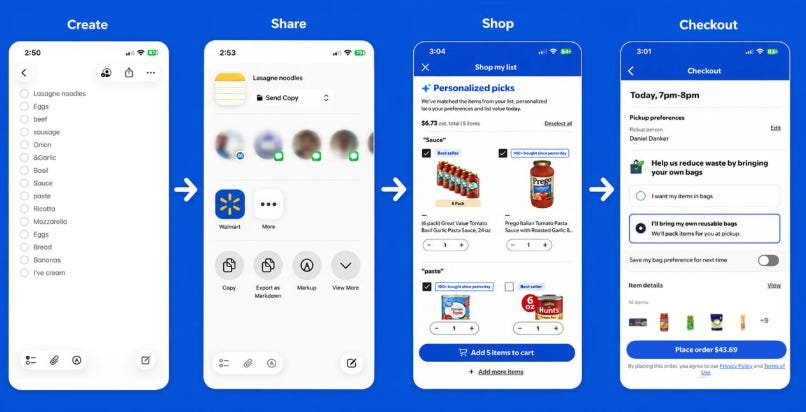
PPPS: On the same day as the post, a Walmart EVP boasted that they launched an AI-powered shopping list. Can you see where they failed?
Herb Sorensen (2016) Inside the Mind of the Shopper: The Science of Retailing. (2nd ed.). FT Press. https://amzn.to/4xfYjBv
“The US Grocery Slowdown is Real.” Bain & Company: https://www.bain.com/insights/the-us-grocery-slowdown-is-real-snap-chart
“Seventh Annual Retailer Preference Index (RPI) for U.S. Grocery.” dunnhumby: https://quarterly.dunnhumby.com/january-2023/seventh-annual-retailer-preference-index-rpi-for-us-grocery