



This is the second post in a 5-part series, The Unit Problem, on how grocers can reverse unit volume contraction. We started here.
TL;DR
Digital grocery tools are training shoppers to prune their baskets. A visible running total is not neutral. It triggers anxiety, and high-margin items come out before checkout.
The fix is upstream: mission-based entry points, pre-built weekly baskets in the Thursday planning window, savings summaries before the total, and QR codes that turn in-store displays into digital carts.
The shopper is not the problem. The interface is.
The grocery apps and sites were supposed to drive basket size. They’re doing the exact opposite.
A shopper building a cart online has something no in-store shopper has ever had: a running total, visible at all times, and updated with every item added. The behavioral consequence is predictable. When the number gets uncomfortable, items come out. The planned items remain, but the high-margin items, the impulse additions and premium versions, would have gone in the cart without a second thought in the store.
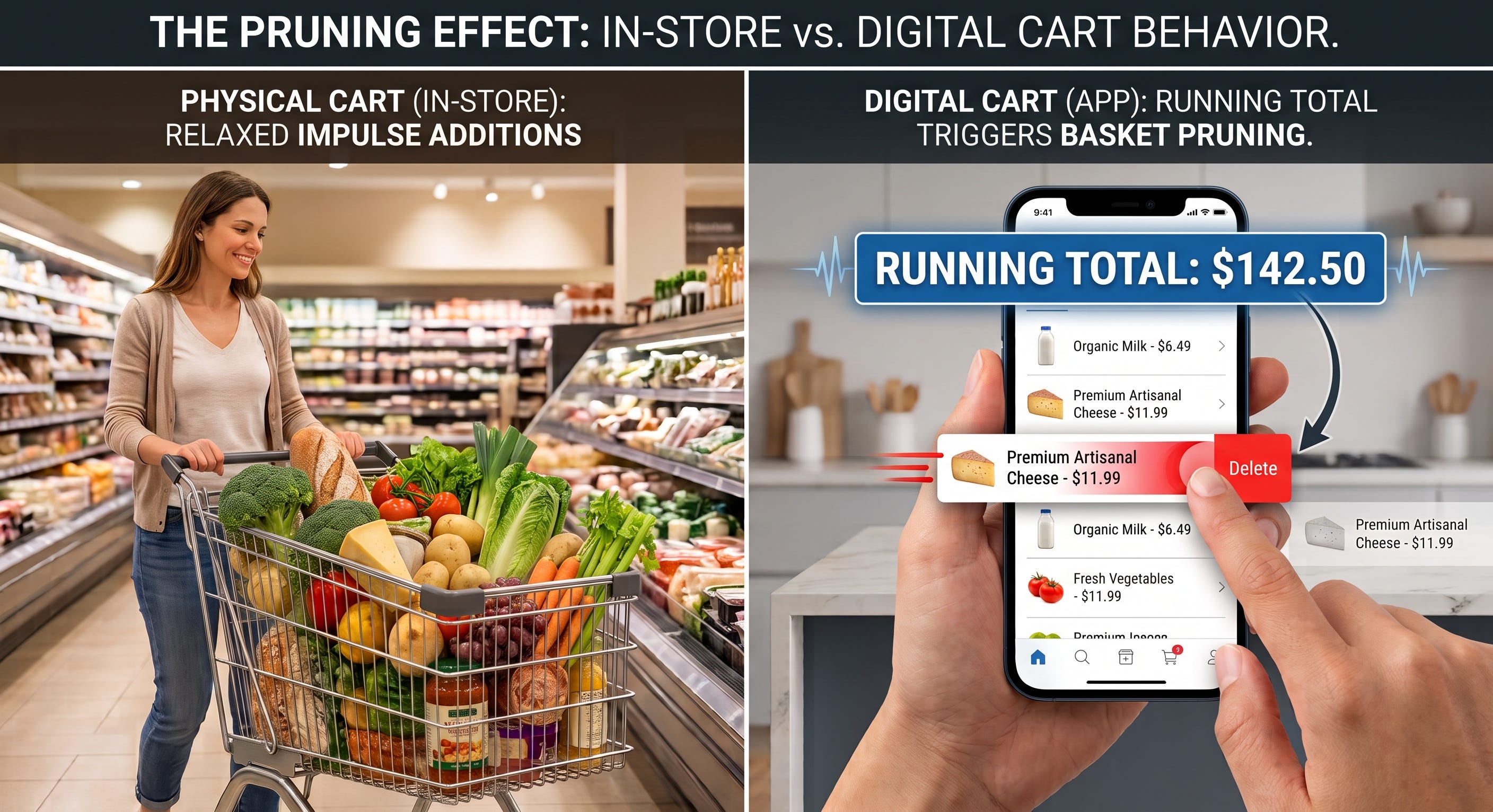
This is basket pruning. It is a structural feature of the digital grocery channel. The shoppers who removed three items before checkout are not behaving irrationally. They’re doing exactly what the interface trained them to do.
Showing the cart total is not the problem. What the shoppers think about before they get there is.