


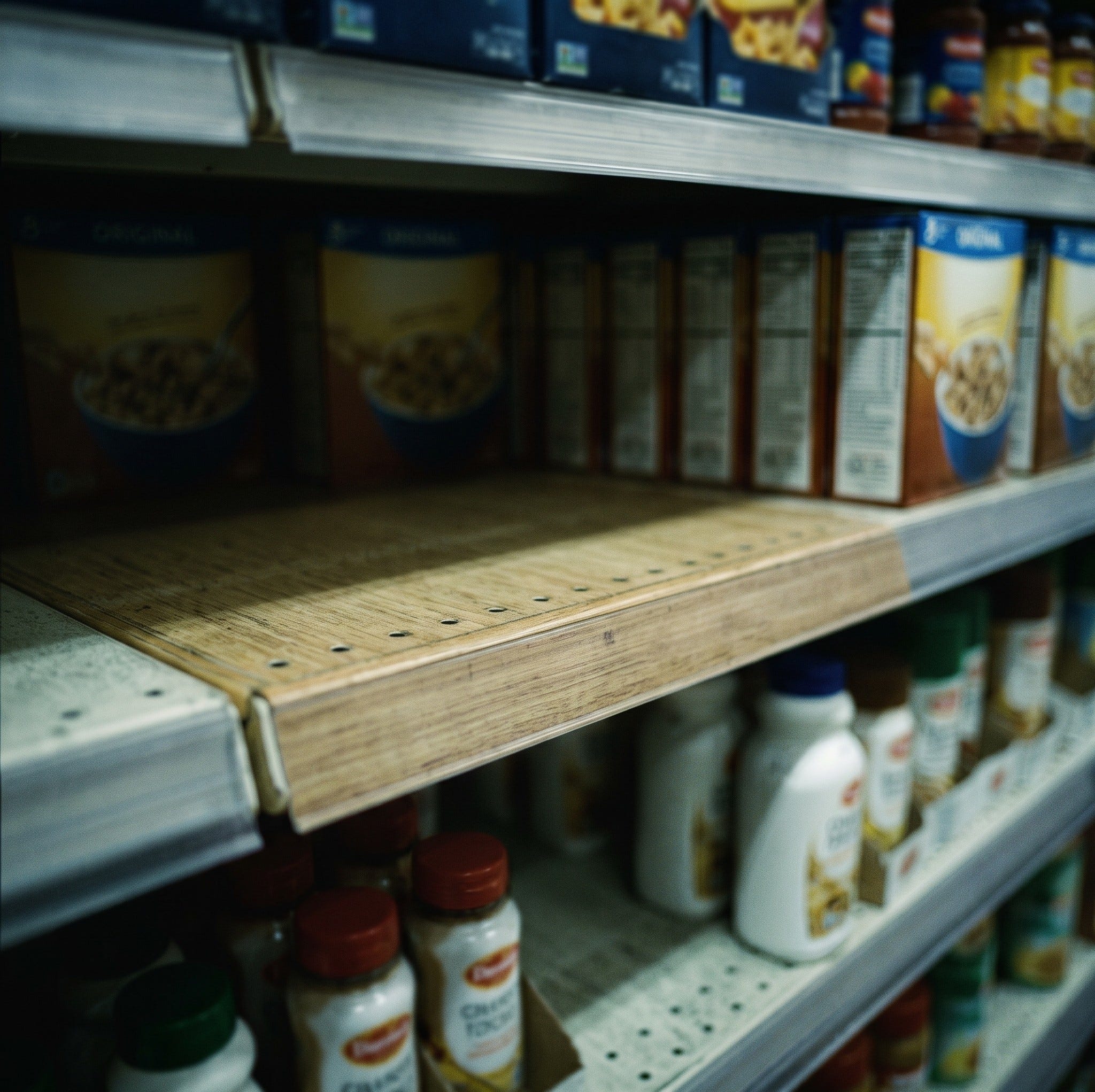
Every empty slot an Instacart shopper sees in your aisle now becomes a data point. Instacart just announced a portal that shows CPGs, store by store and day by day, when shoppers switch to a competitor. What Instacart hasn't said is whether you'll see what they see.
Here’s what Instacart shipped
On Sept. 21, Instacart announced in-store software that maps a store down to individual products on the shelf. Instacart says its network of about 600,000 shoppers visits each store more than 15 times a day on average, and that those visits produce over 10 million unique shelf-scan data points daily.1
The company blends those scans with more than 1.6 billion lifetime orders plus shelf imagery from shoppers and Caper Carts. The computer vision comes from Arpalus, a startup Instacart acquired in July. Instacart’s chief commercial officer said traditional inventory systems “weren’t built for today’s reality.”
Two products come out the other end. Grocers get Inventory Intelligence, a virtual store view with shelf visibility, merchandising suggestions, and out-of-stock forecasting.
CPGs get the Store Excellence Portal. It gives them a daily store-level shelf view, estimated lost sales by store and UPC, and a record of whether shoppers switched to a competitor when an item was missing. Both products are rolling out with select grocers and brands now, with more coming over the next few months.
An empty shelf costs more than one sale
Out-of-stocks rarely get their own line on the P&L. FMI put missed sales of consumer packaged goods from out-of-stocks at 5.8% of total U.S. grocery sales2, or roughly $58 billion.
The damage keeps going after the missed sale. Your customers already split their grocery spend across several stores, and an empty slot hands them one more reason to fill the basket somewhere else.
So a live view of every gap is worth real money to whoever holds it. Instacart says it’s in each store more than 15 times a day.
Three questions Instacart left open
Who controls the shelf data Instacart collects in your stores?
Take a single scan. A shopper stands in your aisle 7, phone out, scanning the tag under the gap where the granola should be. You bought that granola, and your category manager slotted it right where the planogram binder says it goes.
Any customer can see that empty slot, so a legal fight over who owns the view won’t get you far. Your power sits in the contract. Instacart needs your front door and your inventory feed, and it gets neither without a fulfillment agreement you signed.
Instacart drew this map in your stores, on orders your fees help fund, so you should set the terms.
Stitching those scans into a store map took real engineering, and Instacart deserves credit. Read what your delivery contract says about data captured on your floor, because the announcement says nothing about it.
Will Instacart share the full picture with you?
The announcement doesn’t say what Inventory Intelligence costs, or whether it shows you every data point Instacart collects in your stores.
Who else gets to look?
The Store Excellence Portal gives CPGs a daily read on your shelves, store by store, with a dollar figure on every hole. Advantage Solutions, a services firm that works for CPGs, says the portal helps it find missing products and send people to the stores with the biggest sales opportunity.
While brokers filling holes on your shelves help everybody, the category review is where it gets uncomfortable.
The CPG’s sales team opens its deck with your stores ranked by estimated lost sales on its items, refreshed that morning. The next slide shows how often your shoppers walked to the competing brand when its product was gone. Your category manager brings last month’s scan-out report and a planogram binder with a coffee ring on the cover.
Every number in that deck argues for something. They might ask for more facings, or question why it keeps funding promotions your stores didn’t execute.
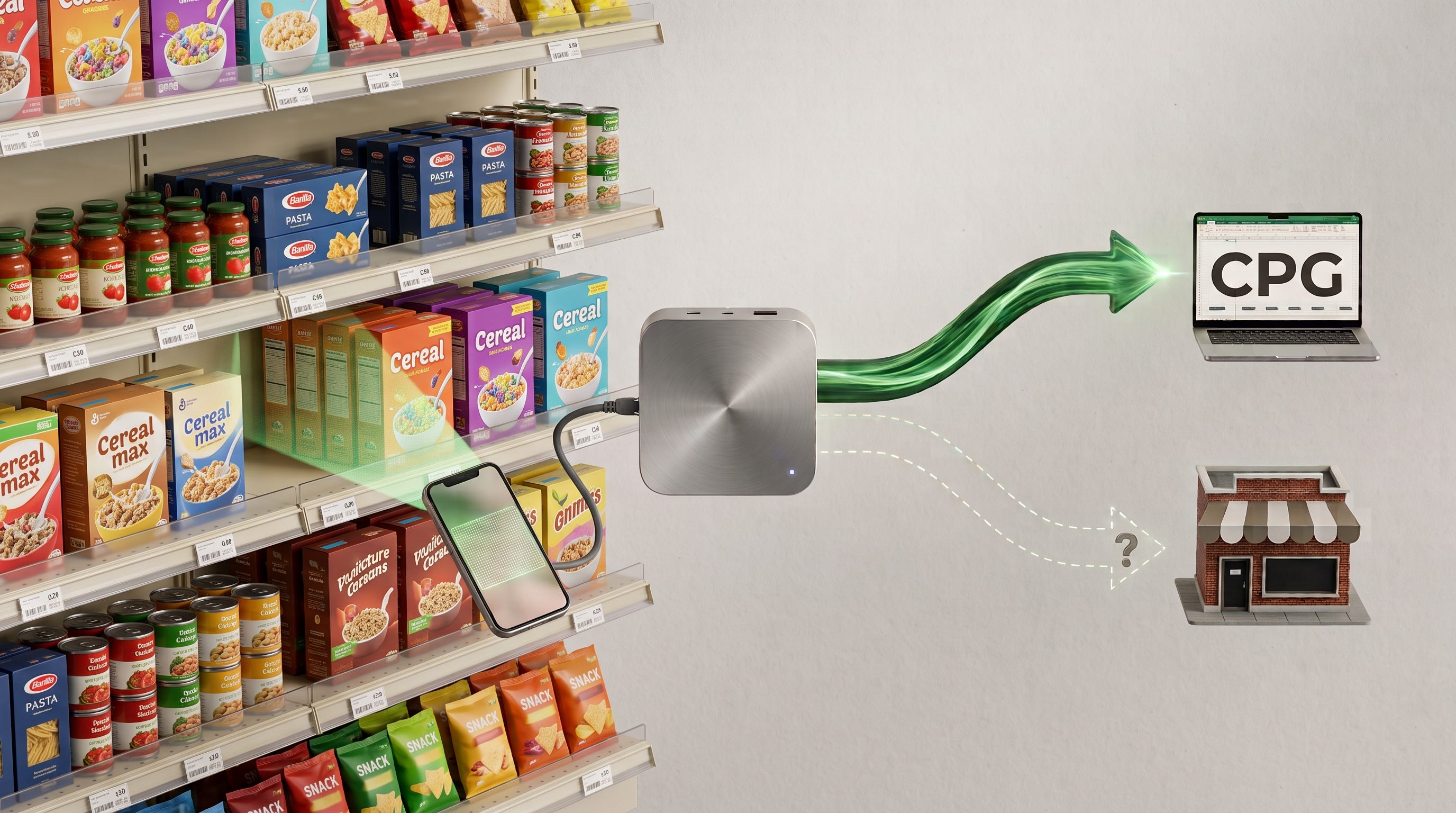
When CPGs show up with better data about your shelves than you have, you lose control of the negotiation before anyone sits down.
And don’t forget that your store brand sits on that same shelf. If the portal counts a switch to your private label as a competitor’s win, a national brand gets a daily read on how your own product performs in your own stores.
The release might not say whether private label shows up in brand reports, whether you can see what CPGs see about your stores, or whether you can block their access. Get those answers before your next category review.
You’re renting eyes
I call this rented eyes: shelf visibility a third party provides back to you, built from data captured in your own stores, which you can lose when the contract ends. Rented eyes can be excellent. The catch is that the landlord rents the same eyes to the brand across the table.
I made this argument about losing substitution data in The Marketplace Dependence Curve. Instacart’s launch carries that loss from their order screens into your physical aisles.
Your department managers might walk the aisles with a scan gun at opening, and again after the truck if the schedule allows. Few regional grocers can staff 15 floor walks per store per day. Instacart gets those walks as a byproduct of orders from your customers, and the fees you’ve paid.
That 15 is a network average, and visits follow order volume. The more a store leans on Instacart, the richer the data it loses.
The Grocery AI Pyramid put shelf accuracy at the foundation. Forecasting, replenishment, markdowns, and personalization all depend on knowing what’s on the shelf right now.
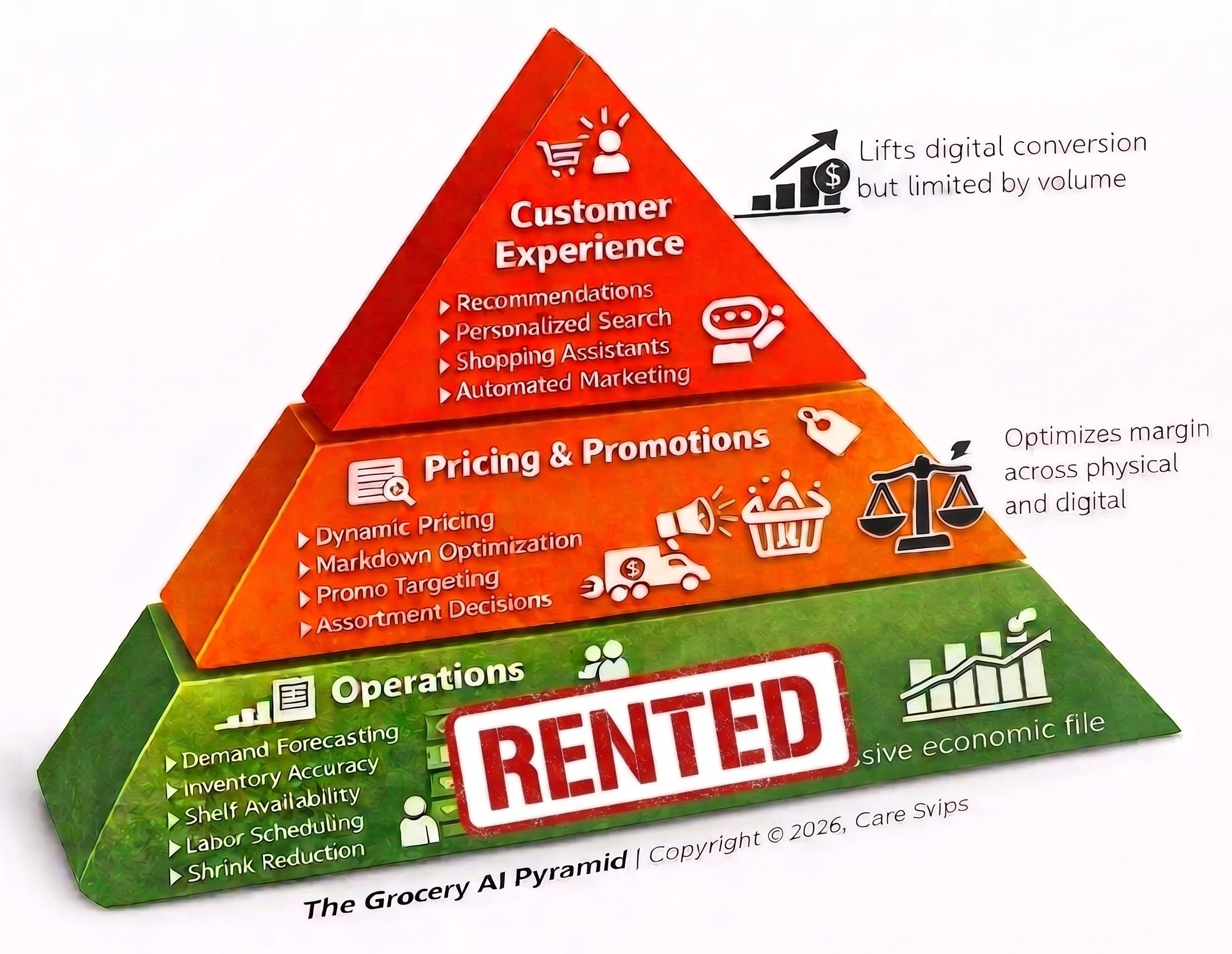
If your shelf truth lives at Instacart, every system you build on top of it runs on rented ground.
What to do this quarter
This is a store operations and data decision, separate from whatever your digital team is scoping for a shopping assistant. Before you sign up or renew, get written answers to these six questions, and sign only if they come back in your favor:
Who owns the shelf scans and images captured inside my stores, and can I export the raw data on a set schedule?
What happens to my stores’ shelf history if I leave the platform?
Does Inventory Intelligence show me every data point Instacart collects in my stores?
What does Inventory Intelligence cost, and is it priced per store, per banner, or bundled into existing fees?
Which CPGs can view my stores in the Store Excellence Portal, and can I approve or block that access store by store?
Do I receive any share of what CPGs pay for portal data about my stores?
Start building your own view before Instacart answers anything. Ask for every not-found and substitution record from your delivery orders, down to the item and the store. How fast that file arrives tells you how Instacart thinks about your stores' data.
Then price a shelf-scanning vendor such as Simbe Robotics for your three busiest stores. Inventory Intelligence should have to beat that number.
Last, call your top broker. Ask what the portal shows them about your stores, then ask for a copy. If they hesitate, you have your answer to question five.
“Instacart Gives Grocers and CPG Brands a Live View of Every Store.” Instacart: https://company.instacart.com/pressreleases/instacart-gives-grocers-and-cpg-brands-a-live-view-of-every-store
“The Food Retailing Industry Speaks 2026.” FMI: https://www.fmi.org/blog/view/fmi-blog/2026/07/07/stats-and-facts-from-fmi-s-signature-operations-benchmarking-report