


This is the fifth in a 5-part series, You Can’t Prompt Produce, on the AI grocers keep shipping, and most shoppers keep skipping. We started here.
TL;DR
Most retail AI budgets focus on customer-facing tools that only a slice of shoppers use, while the backend systems running every transaction get treated like plumbing. This piece lays out a five-step process that scores AI tools on customer friction and operational yield, then sorts them into four quadrants for budget decisions. Bring the plotted case into your next budget cycle instead of a wish list, and let the quadrant argue for the spend.
Picture forty units of ground beef getting rerouted from a store with three days of shelf life left to one that’ll sell out by Thursday. This is a composite scenario, not one company's dashboard. It's already happening across grocers running real-time inventory routing.
No customer asked for it. No customer will ever know it happened. That’s AI actually earning its keep in grocery right now. It’s running quietly behind a much louder conversation about customer-facing AI tools that a fraction of shoppers ever bother opening.
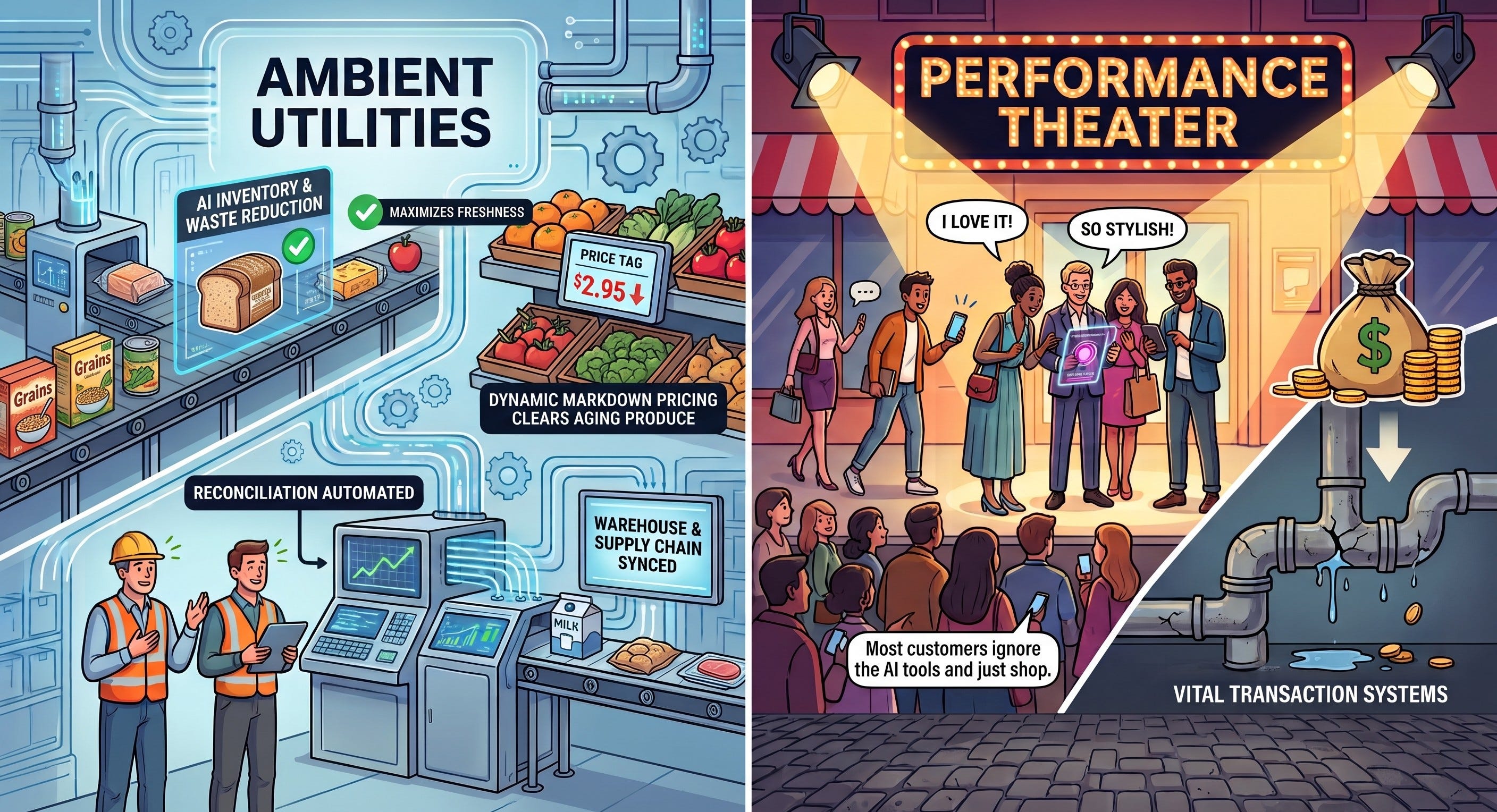
Call the first category Ambient Utilities. They run in the background, constantly, improving margin and moving product without ever asking the customer to type a sentence:
Predictive sizing quietly cuts returns before shoppers notice the friction.
Dynamic markdown pricing clears aging produce before it turns into shrink.
Reconciliation between the warehouse system and the supply chain platform used to take two analysts a week. Now it runs itself.
Call the second category Performance Theater. Customer-facing AI tools work fine for the shoppers who use them, and some genuinely do. The problem is most retail AI budgets get sized around that small, vocal slice, while the systems running every single transaction, whether or not a shopper ever opens an app, get treated like plumbing.
None of the ambient stuff shows up in a keynote. All of it shows up in the P&L.
Grocery margins are thin enough that this math actually matters. A customer-facing feature has to clear a brutal bar: get used, and get used often enough to justify what it cost to build.
A backend feature only has to work correctly once. It keeps paying out every day after with zero adoption risk, because there’s often no human standing between the system and the outcome.
The five-step framework
Every CTO staring down a budget cycle needs a way to sort the pile of AI vendor pitches sitting in their inbox. Here’s the process:
Inventory: List every AI tool in production or in the pipeline, including the one a VP championed personally.
Score Customer Friction: Rate how much it requires from the customer: a click, a prompt, a decision, attention. Low friction means it works whether or not the customer notices it exists.
Score Operational Yield: What's the measurable business impact? Is it reduced shrink, saved labor hours, better forecast accuracy, or lower fulfillment cost per order?
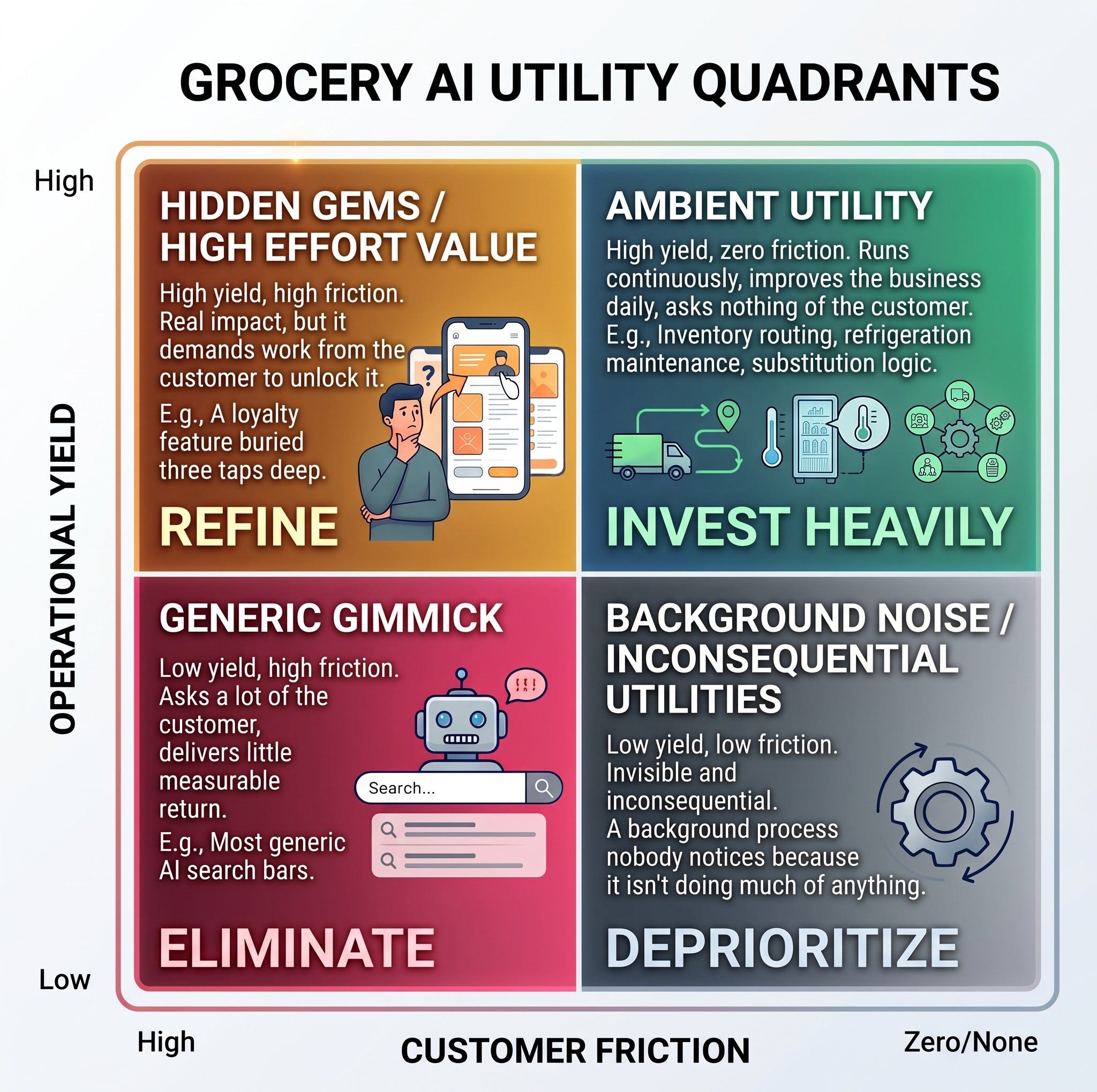
Plot the Quadrant: Plot two axes: friction on one, yield on the other. Every tool gets a dot.
Allocate by Quadrant: Set budget bands per quadrant, not per project. Let the quadrant decide the funding tier, not whoever pitched hardest.
Step four is where the real argument happens
:
Notice what the framework doesn't say. It doesn't say abandon customer-facing AI to fund the routing engine. Those tools usually draw from different budgets run by different teams answering to different people anyway. This is about weighing new capital against both criteria at once, visibility and yield, so spend lands where it's actually earned instead of wherever the demo looked best.
Running this at budget time
Boards love a demo. They fund what they can see. That's exactly the bias this framework has to fight, which means you walk in with the plot already drawn, not a list of asks.
Bring the quadrant chart, not a feature roadmap. Show which tools already sit in “eliminate” and name the dollar figure that frees up, separate from any new ask. A CTO who kills their own pet project before someone else asks why it’s still funded earns more trust in that room than any pitch deck ever will.
Frame every request in yield language before friction language. “This cuts a manual reconciliation step” beats “this gives customers a smarter experience” every time, even when it’s the exact same tool wearing a different shirt. Yield is a number a board can defend to its own shareholders. Experience is a feeling, and feelings get eaten alive in the second round of questions.
Run this as a standing quarterly review, not a one-time exercise. Tools drift between quadrants the way milk drifts toward the back of the fridge, quietly, until someone finally checks the date. What scored high yield eighteen months ago might be curdled by now.
The real test isn't whether the customer notices the AI. It's whether the AI is earning its keep either way.
Where does your stack fail that test?
You Can’t Prompt Produce is a five-part series on how the AI grocers keep shipping, and most shoppers keep skipping.